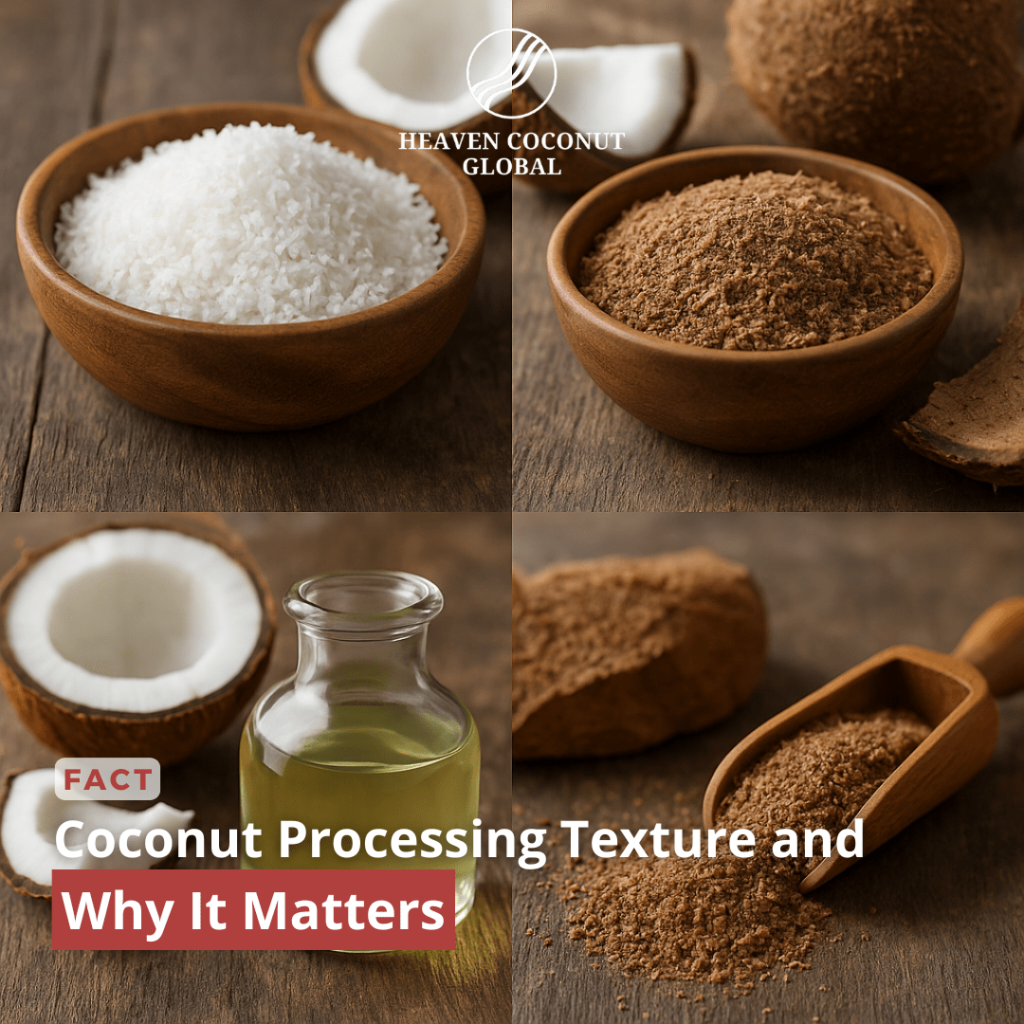
Coconut Processing Texture and Why It Matters
Coconut processing texture is one of the most important elements that determine the final quality of coconut-based products. From desiccated coconut to copra meal and RBD coconut oil, the texture at every stage of processing impacts not only product performance but also the buyer’s confidence.
Understanding texture and how it is controlled can help importers, food manufacturers, and feed producers select the right supplier—and this is where Heaven Coconut Global sets itself apart.
What Is Coconut Processing Texture?
Texture in coconut processing refers to the consistency, dryness, and particle size of the product. Each product type has a texture that must meet specific standards to ensure performance and compatibility with end-use applications.
Inconsistent texture can signal poor processing practices, reduced efficiency in use, or even spoilage. On the other hand, consistent texture reflects processing discipline, quality assurance, and export readiness.
Texture in Desiccated Coconut
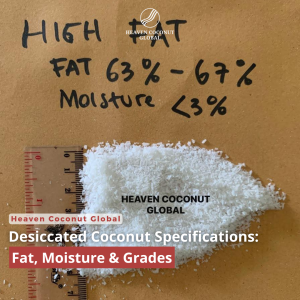
For desiccated coconut, texture is everything. The product is used in a wide range of bakery and confectionery items, and its size—fine, medium, or coarse—must be even and low in moisture (under 3%).
Why does this matter?
-
Even texture ensures smooth blending in recipes.
-
Proper moisture control extends shelf life and prevents clumping.
-
Inconsistent cuts can lead to poor product appearance.
At Heaven Coconut Global, we offer desiccated coconut with uniform cuts and stable moisture levels—supported by a Certificate of Analysis (COA) for every shipment.
Texture in Copra Meal
In copra meal, texture affects its usability as animal feed. The meal must be finely ground for optimal digestibility while avoiding powder that may reduce blending efficiency.
Benefits of the right texture include:
-
Better nutrient absorption
-
Easier integration into feed formulas
-
More efficient packing and transport
Heaven Coconut Global produces copra meal with a consistent dry texture, high fiber control, and protein content above 20%. This ensures it meets the needs of both large-scale feed mills and smaller buyers.
Texture for RBD Coconut Oil
Although RBD coconut oil is liquid in its final form, the texture of the raw material—dried copra—influences the final oil yield and quality.
Poorly dried or unevenly textured copra can result in:
-
Lower oil extraction efficiency
-
Higher impurities or discoloration
-
Reduced shelf life
Our production process includes precise drying and preparation to ensure the copra is clean, uniform, and optimized for high-yield oil processing. As a result, we offer premium-grade RBD CNO suitable for both food and cosmetic industries.
Why Texture Reflects Processing Standards
Texture is often the first indicator of quality in coconut products. Uniform texture means the product was:
-
Processed with clean and calibrated equipment
-
Checked by quality control systems
-
Ready to pass inspections for export
That’s why so many importers trust Heaven Coconut Global: our dedication to texture control translates into reliable, high-quality coconut products every time.
Why Work With Heaven Coconut Global?
As a trusted coconut product supplier from Indonesia, we understand how coconut processing texture directly affects your operations. Whether you need desiccated coconut, copra meal, or RBD CNO, we provide:
✅ Precise texture grades
✅ Verified COA and moisture control
✅ Export documentation and support
✅ Reliable supply chain for bulk orders
Conclusion
Coconut processing texture is more than a visual element—it determines usability, efficiency, and customer satisfaction. By focusing on texture quality, you ensure consistent results in food, feed, and oil applications.
Heaven Coconut Global is ready to be your trusted supplier, delivering export-ready coconut products with professional texture control. Contact us today to request samples, specs, or a quotation tailored to your market needs.