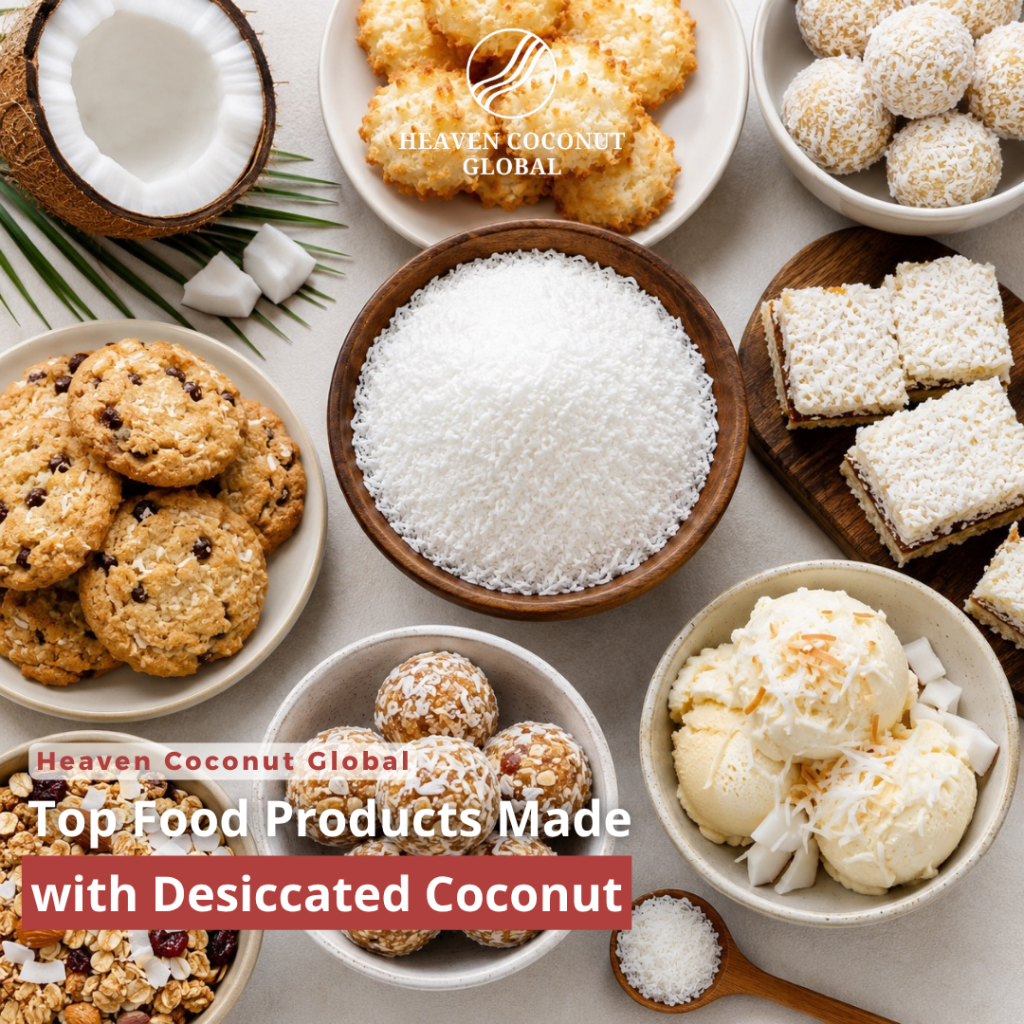
Top food products made with desiccated coconut can be found across many segments of the global food industry. From bakery products and confectionery to snacks and frozen desserts, desiccated coconut has become a versatile ingredient valued for its flavor, texture, and convenience. Moreover, its long shelf life and ease of storage make it a practical choice for manufacturers producing food at scale.
As consumer demand for coconut-based ingredients continues to grow, food companies are finding new ways to incorporate desiccated coconut into their products. In addition, the ingredient works well with a wide range of formulations, allowing manufacturers to create products that appeal to different markets and consumer preferences. As a result, desiccated coconut remains a key ingredient in many popular food categories around the world.
Desiccated Coconut in Bakery Applications
One of the most common applications of desiccated coconut is in the bakery industry. Bakers use it in a variety of products, including cakes, muffins, cupcakes, sweet breads, and pastries. Furthermore, desiccated coconut adds a distinctive flavor and a pleasant texture that consumers often associate with premium baked goods.
Many bakeries use desiccated coconut as an ingredient within the recipe, while others apply it as a topping or decoration. In addition, it pairs well with ingredients such as chocolate, vanilla, and various fruits. Because of its versatility, desiccated coconut continues to be a favorite ingredient among commercial bakeries worldwide.
Cookies and Biscuits Made with Desiccated Coconut
Cookies and biscuits are another major category where desiccated coconut is widely used. For example, manufacturers often combine coconut with chocolate chips, oats, almonds, or raisins to create products with unique flavor profiles.
In addition to flavor, desiccated coconut contributes texture, helping cookies achieve a satisfying bite. As a result, coconut-based cookies remain popular among consumers of all ages. Moreover, manufacturers appreciate the consistency that desiccated coconut provides during large-scale production.
Desiccated Coconut Food Products in the Confectionery Industry
The confectionery sector has long relied on desiccated coconut for a variety of sweet treats. Moreover, coconut pairs exceptionally well with chocolate, making it a popular ingredient in chocolate bars, truffles, and confectionery fillings.
Common products include coconut-filled chocolate bars, coconut candies, and chocolate-coated coconut snacks. Because of this combination of flavor and texture, coconut-based confectionery products continue to perform well in many international markets.
Furthermore, desiccated coconut allows manufacturers to create distinctive products that stand out from traditional confectionery offerings. As consumer preferences evolve, many brands continue to introduce new coconut-inspired products.
Popular Snack Products Made with Desiccated Coconut
The snack industry continues to evolve as consumers seek convenient and flavorful options. Meanwhile, desiccated coconut is increasingly used in snack bars, granola products, trail mixes, and bite-sized snacks.
In addition, coconut blends well with nuts, seeds, dried fruits, and oats. As a result, manufacturers can develop products that offer both taste and texture. Many snack brands also appreciate the ingredient’s ability to enhance product appearance.
Furthermore, desiccated coconut provides flexibility in product development, allowing manufacturers to create a wide range of snack concepts for different markets.
Breakfast Food Products Featuring Desiccated Coconut
Breakfast cereals and granola products frequently include desiccated coconut. For example, coconut can be mixed with grains, dried fruits, and nuts to create flavorful breakfast options.
Moreover, the ingredient adds visual appeal and a pleasant tropical taste. As a result, many consumers view coconut-based breakfast products as an attractive alternative to traditional cereal options.
In addition, food manufacturers often use desiccated coconut to differentiate their products in a competitive marketplace. Therefore, coconut continues to appear in a growing number of breakfast product innovations.
Frozen Desserts Featuring Desiccated Coconut
Frozen desserts represent another important category in the food industry. Ice cream, gelato, and frozen dessert manufacturers often use coconut to create tropical flavor profiles that appeal to consumers.
Similarly, desiccated coconut can be incorporated into dessert fillings or used as a topping. In addition, it contributes texture that enhances the overall eating experience.
As consumer demand for unique dessert flavors grows, manufacturers continue to explore new ways to incorporate coconut into frozen products. Consequently, coconut remains a valuable ingredient in this segment.
Traditional and Ethnic Foods Made with Desiccated Coconut
Many traditional and ethnic food products rely on desiccated coconut as a key ingredient. Across Asia, the Middle East, Europe, and Latin America, coconut has been used in regional recipes for generations.
For example, desiccated coconut is commonly found in traditional sweets, pastries, filled desserts, and specialty snacks. Moreover, it helps preserve authentic flavors while providing consistency for commercial production.
As interest in global cuisines continues to increase, demand for coconut-based ingredients remains strong. Therefore, manufacturers producing ethnic foods often view desiccated coconut as an essential ingredient.
Why Food Manufacturers Prefer Desiccated Coconut
Food manufacturers choose desiccated coconut for several reasons. First, it offers consistent quality and reliable performance. In addition, it has a relatively long shelf life when stored properly.
Furthermore, desiccated coconut is easy to handle, transport, and incorporate into different food formulations. As a result, manufacturers can use it across multiple product categories without major production adjustments.
Moreover, consumers already recognize and enjoy coconut-based flavors. Because of this familiarity, products containing coconut often appeal to a broad audience.
Growing Demand for Coconut-Based Food Products
The global food industry continues to embrace coconut-based ingredients. Meanwhile, consumers are becoming more interested in new flavors, innovative snacks, and premium bakery products.
As a result, manufacturers are expanding their use of desiccated coconut across various food categories. In addition, the ingredient’s versatility allows companies to develop products that meet changing consumer preferences.
Whether used in bakery products, confectionery items, cereals, snacks, or frozen desserts, desiccated coconut continues to demonstrate its value as a versatile food ingredient.
Conclusion
The variety of food products made with desiccated coconut continues to grow as manufacturers develop new products for consumers around the world. From cakes and cookies to confectionery, snacks, cereals, and frozen desserts, desiccated coconut delivers flavor, texture, and versatility that few ingredients can match.
Moreover, its compatibility with different food applications makes it a practical choice for manufacturers seeking reliable ingredients. As global demand for coconut-based products continues to increase, desiccated coconut is expected to remain an important component of food manufacturing.
At Heaven Coconut Global, we work with experienced Indonesian manufacturing partners to supply high-quality desiccated coconut for food manufacturers, distributors, and importers worldwide. Whether for bakery, confectionery, snack, or dessert applications, we are committed to helping our partners source reliable coconut products that meet international quality standards