Coconut Oil vs Palm Oil: What’s the Difference?
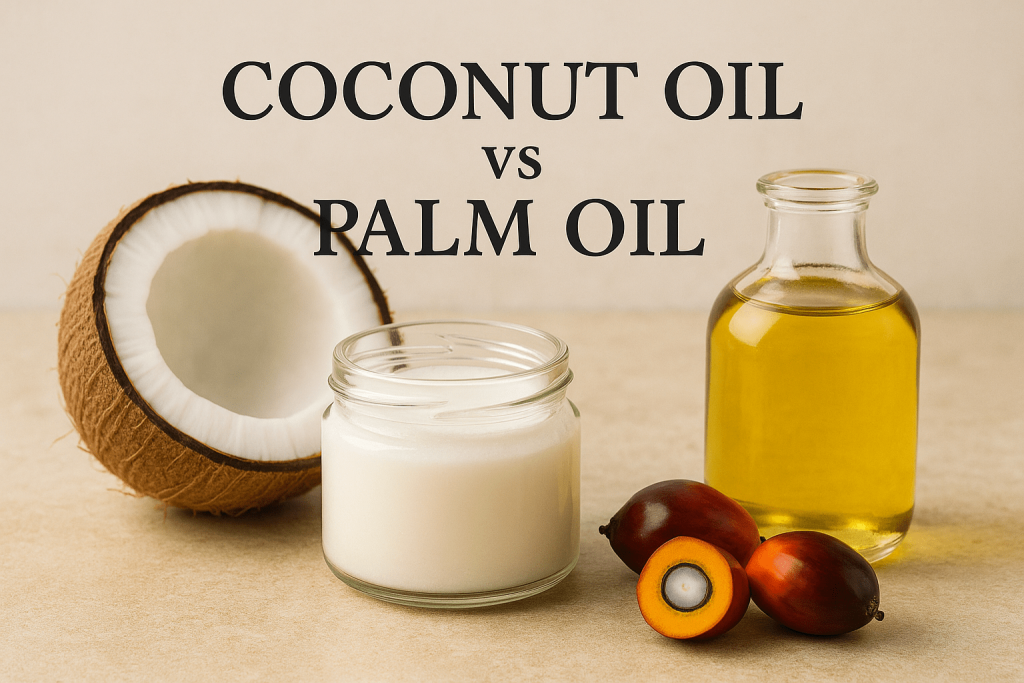
Coconut vs palm oil is a widely discussed topic across the food and cosmetic industries. Though both oils come from tropical plants, they differ greatly in source, nutritional value, health effects, and sustainability.
Here is a detailed comparison of coconut oil vs palm oil:
1. Source and Production Process
Coconut Oil
Coconut oil is extracted from the meat of fresh or dried coconuts (copra). There are two main types:
-
Virgin Coconut Oil (VCO): Naturally processed without high heat.
-
Refined Coconut Oil: Undergoes further purification.
Palm Oil
Palm oil comes from the flesh of the oil palm fruit, while palm kernel oil is extracted from the seed. The production involves pressing, refining, and heating.
2. Nutritional Composition and Chemical Properties
Coconut Oil
-
High in saturated fatty acids (around 90%), especially lauric acid.
-
Contains Medium Chain Fatty Acids (MCFAs), which are easily digested and quickly converted into energy.
-
Highly stable at high temperatures—ideal for cooking.
Palm Oil
-
A mix of saturated and unsaturated fats (about 50/50).
-
Rich in vitamin E (tocotrienols) and beta-carotene, powerful antioxidants.
-
Stable and has a long shelf life—commonly used in processed foods.
3. Flavor and Aroma
Coconut Oil
-
Has a distinctive coconut flavor and aroma, especially in virgin form.
-
Refined coconut oil is more neutral in taste.
Palm Oil
-
Typically has a neutral taste, although crude palm oil can have a reddish hue and strong scent due to its beta-carotene content.
4. Common Uses
-
Food: Cooking, baking, and in health-focused food products.
-
Cosmetics: Natural moisturizer, hair mask, and soap ingredient.
-
Health: Known to support metabolism and immune function.
Palm Oil
-
Food: Widely used in processed foods like margarine, instant noodles, and baked goods.
-
Industrial: Used in soaps, candles, biodiesel, and lubricants.
5. Health Impacts
Coconut Oil
-
Contains lauric acid that supports heart health by increasing good cholesterol (HDL).
-
Due to high saturated fat, consumption should be moderated for individuals with heart or cholesterol issues.
Palm Oil
-
Excess consumption of saturated fat may raise bad cholesterol (LDL).
-
Rich in vitamin E, which promotes healthy skin and fights free radicals.
6. Environmental Impact
Coconut Oil
-
Generally more environmentally friendly due to smaller land requirements.
-
Can be sustainably produced if managed responsibly.
Palm Oil
-
Linked to deforestation, habitat loss, and high carbon emissions.
-
RSPO (Roundtable on Sustainable Palm Oil) certification programs aim to reduce environmental damage.
7. Price and Availability
Coconut Oil
-
Usually more expensive due to a more complex production process and lower yield.
Palm Oil
-
More cost-effective and widely available, making it a top choice for large-scale industries.
Conclusion
Coconut oil and palm oil each have distinct advantages and trade-offs. Coconut oil is ideal for premium, health-focused products, while palm oil offers cost efficiency and large-scale availability.
Your choice depends on your goals—whether it’s health, taste, or sustainability.
If you’re looking for high-quality coconut oil for food, cosmetic, or industrial use, Heaven Coconut Global is here to supply the finest coconut products to meet your needs.