Cold-Pressed vs RBD Coconut Oil: Best Choice for Cooking & Industry
Coconut oil plays a vital role in both culinary traditions and industrial applications. Among the many types available, two varieties dominate the market: Cold-Pressed Coconut Oil and RBD Coconut Oil. Understanding the difference between these oils is essential, especially if you’re choosing the right product for specific needs. In this article, we will explore Cold-Pressed vs RBD Coconut Oil, their unique characteristics, and which is better suited for cooking or industry.
What is Cold-Pressed Coconut Oil?
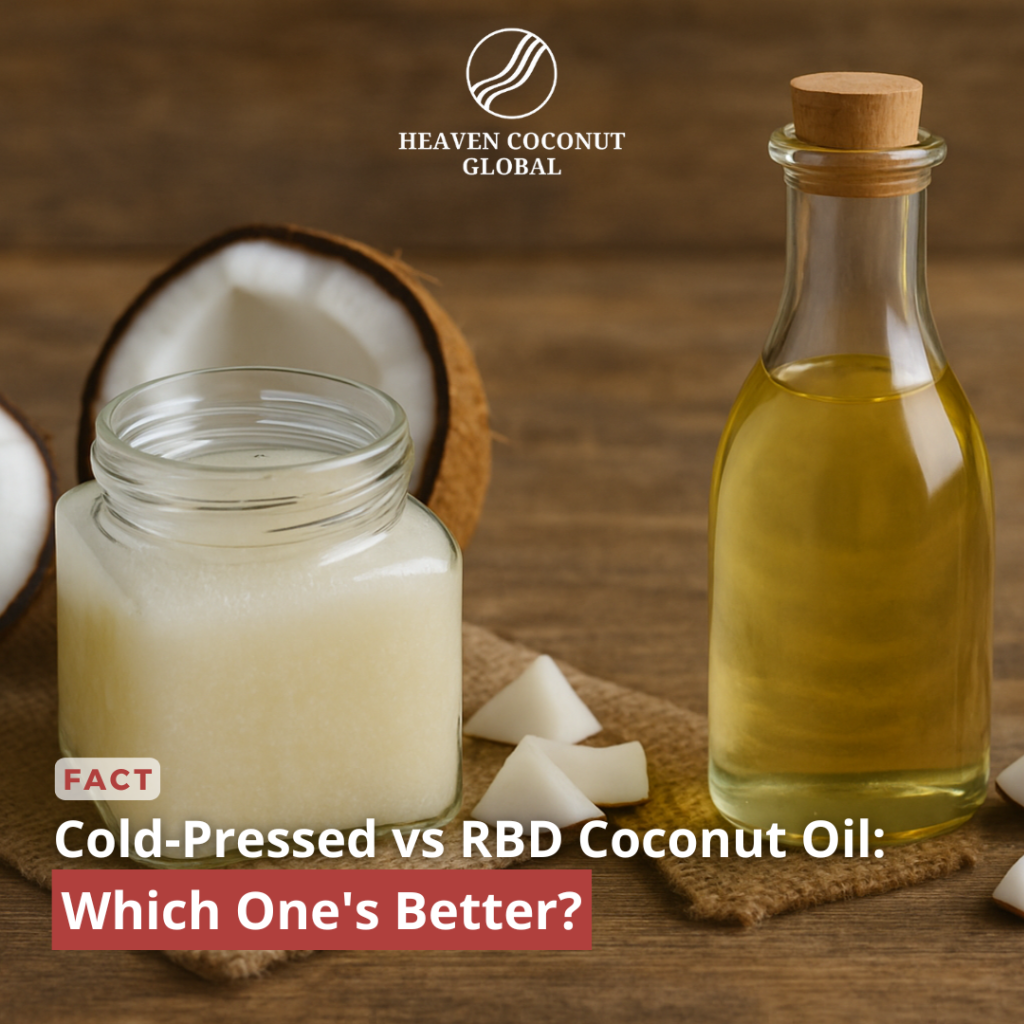
Cold-Pressed Coconut Oil is extracted from fresh coconut meat using mechanical pressure, without applying heat or chemicals. This method preserves natural nutrients and antioxidants, resulting in a pure, aromatic oil that’s rich in lauric acid, vitamin E, and phenolic compounds.
Benefits:
-
Retains coconut flavor and aroma
-
Rich in natural antioxidants
-
Ideal for low-heat cooking and raw recipes
-
Popular in skincare and wellness products
However, its lower smoke point (around 177°C) and shorter shelf life make it less suitable for high-temperature or long-term industrial uses.
What is RBD Coconut Oil?
RBD stands for Refined, Bleached, and Deodorized. This coconut oil is made from copra (dried coconut kernel) and goes through a refining process to remove odor, flavor, and impurities. The result is a neutral-tasting, long-lasting oil commonly used in commercial food production, cosmetics, and industrial processes.
Advantages of RBD Coconut Oil:
-
High smoke point (~204°C)
-
Neutral scent and flavor
-
Long shelf life
-
Stable for high-heat and large-scale applications
Although it loses some nutrients during processing, RBD Coconut Oil is perfect for scenarios requiring consistency, stability, and volume.
Cold-Pressed vs RBD Coconut Oil for Cooking
When comparing Cold-Pressed vs RBD Coconut Oil for cooking, it comes down to flavor, smoke point, and purpose.
-
Cold-Pressed Oil is ideal for sautéing, salad dressings, and baking where you want a natural coconut aroma and nutritional value.
-
RBD Oil is better for frying, food manufacturing, and any recipe requiring a neutral oil that won’t overpower other ingredients.
For home cooks who prioritize health and taste, cold-pressed is an excellent choice. For chefs or manufacturers focusing on efficiency and stability, RBD is the winner.
Cold-Pressed vs RBD Coconut Oil for Industry
In industrial contexts, RBD Coconut Oil is generally the more practical choice:
-
Used in cosmetics, soaps, and pharmaceuticals
-
Preferred in food processing and frying lines
-
More cost-effective and consistent for bulk production
Cold-Pressed Coconut Oil still has industrial value, especially in premium organic products, niche cosmetics, and health supplements where unrefined purity is a selling point.
Heaven Coconut Global: Supplying Both Oil Types
At Heaven Coconut Global, we understand the different needs of culinary experts, manufacturers, and wellness brands. That’s why we offer high-quality Cold-Pressed Coconut Oil and RBD Coconut Oil for export, customized to your product goals and market demand.
From Indonesia’s finest coconuts to strict quality control, we ensure every drop of oil meets global standards. Whether you’re formulating skincare products or exporting for food production, Heaven Coconut Global is your trusted supplier.
Conclusion
So, in the debate of Cold-Pressed vs RBD Coconut Oil, there’s no one-size-fits-all answer. The best option depends on how you plan to use it. Choose Cold-Pressed Coconut Oil for aroma, nutrients, and artisanal value. Opt for RBD Coconut Oil when you need neutrality, high heat performance, and industrial reliability.
Need a reliable coconut oil exporter? Reach out to Heaven Coconut Global—we’re here to meet your business needs with premium coconut solutions.