Copra Meal Comparison: Nutritional & Economic Insights
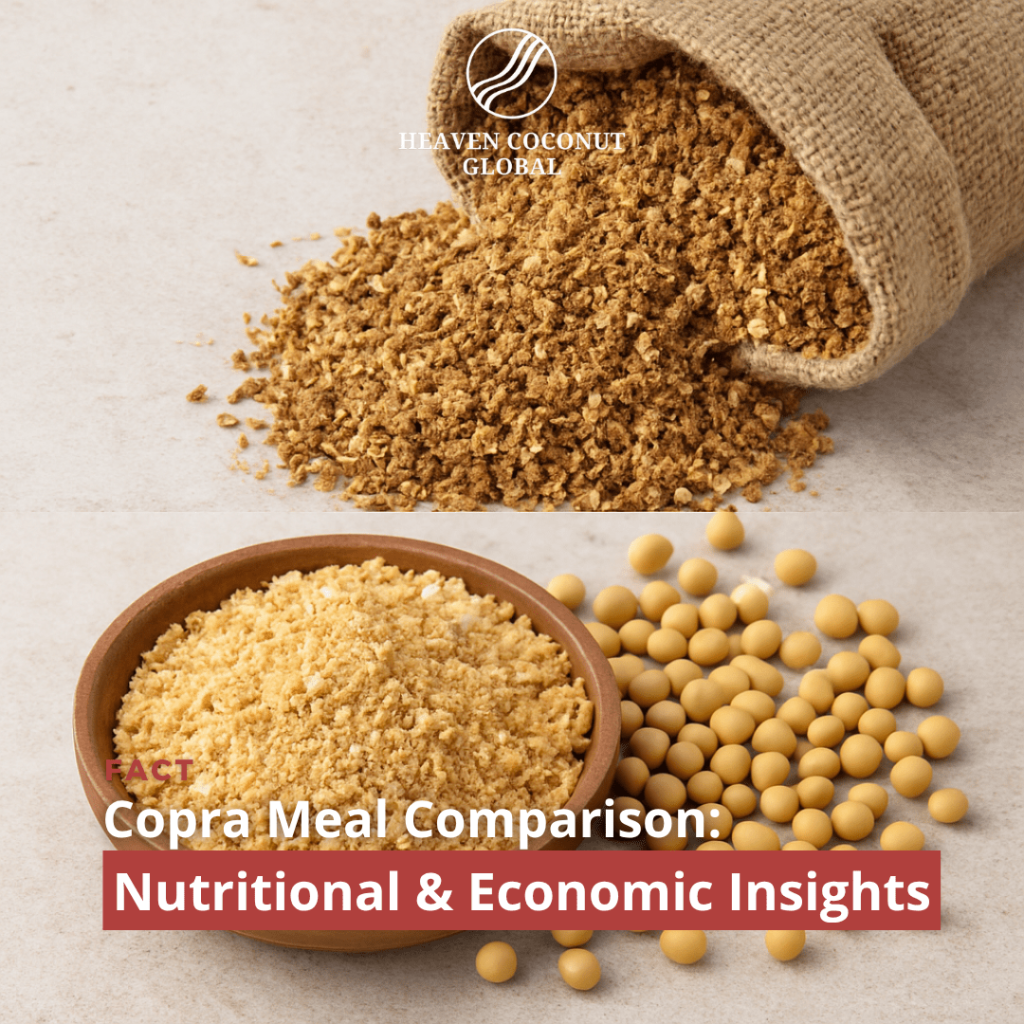
In the livestock feed industry, selecting the right plant-based protein source is critical for both nutrition and cost efficiency. This copra meal comparison provides clear insights into how copra meal measures up against other popular feed ingredients like soybean meal, helping you make smarter feed formulation decisions.
What is Copra Meal?
Copra meal is the byproduct of extracting coconut oil from dried coconut kernels (copra). It is a fibrous, protein-rich ingredient commonly used in animal feeds across Asia, Africa, and the Pacific. This copra meal comparison highlights its growing role as a sustainable and affordable alternative to traditional feed ingredients.
Nutritional Comparison: Copra Meal vs Soybean Meal
1. Crude Protein
-
Soybean Meal: 44–48%
-
Copra Meal: 20–25%
Soybean meal has a higher protein concentration, making it ideal for broilers and pigs. However, copra meal still plays a vital role in feed formulas for ruminants and poultry, especially in tropical regions.
2. Fiber Content
-
Copra Meal: 12–16%
-
Soybean Meal: 3–7%
Copra meal’s high fiber content improves gut health in cattle, goats, and layers. It may require careful formulation when used for pigs or young poultry.
3. Oil and Energy Value
-
Copra Meal: 8–10% residual oil
-
Soybean Meal: 1–2% fat
Copra meal contains medium-chain fatty acids (MCFAs) like lauric acid, providing energy and antimicrobial benefits. This makes it a dual-purpose ingredient: both protein and energy source.
Cost and Market Availability
A key factor in this copra meal comparison is cost. Soybean meal is often imported, subject to global pricing, and can be volatile. Copra meal, especially in coconut-rich countries like Indonesia, offers:
-
More stable pricing
-
Local sourcing
-
Lower transportation costs
For feed producers and importers looking for cost efficiency without sacrificing quality, copra meal is a smart option.
Sustainability Considerations
Soybean farming is often associated with deforestation and high water usage. In contrast, copra meal is a byproduct of coconut processing, supporting:
-
Zero-waste production
-
Smallholder coconut farmers
-
Circular economy models
Choosing copra meal contributes to more sustainable feed supply chains — a major benefit highlighted in this copra meal comparison.
Feed Application and Performance
Copra meal is commonly used in feed for:
-
Dairy cattle and beef
-
Sheep and goats
-
Poultry (especially layers)
-
Aquaculture (in blended formulas)
While soybean meal excels in amino acid balance, modern feed formulation allows copra meal to fill key roles in protein-energy blends.
Why Source from Heaven Coconut Global?
At Heaven Coconut Global, we provide premium copra meal with:
-
Consistent moisture and oil content
-
Low aflatoxin levels
-
Custom packaging (bulk or bagged)
-
CIF export from Indonesia to your port
Our copra meal meets international feed standards and supports sustainable, efficient livestock production. Whether you’re looking for a partial soybean replacement or a primary ingredient for ruminants, Heaven Coconut Global delivers quality you can trust.
Conclusion
This copra meal comparison shows that while soybean meal is higher in protein, copra meal delivers real value in cost, energy, sustainability, and regional availability. With proper formulation, it can reduce feed costs and support responsible sourcing.
📩 Get in touch with Heaven Coconut Global for pricing, samples, and specifications tailored to your market.