Handling Copra Meal in Humid Climates: Best Practices for Quality Preservation
Copra meal, a by-product of coconut oil extraction, is a valuable feed ingredient rich in protein and fiber. However, its organic composition makes it susceptible to spoilage, especially in humid climates where moisture levels are high. Proper handling and storage of copra meal in such conditions are crucial to maintain its quality, safety, and shelf life.
In this article, we’ll explore how to effectively manage copra meal in humid climates, including the risks, prevention strategies, and how exporters like Heaven Coconut Global ensure premium product integrity from warehouse to destination.
Why Humidity Is a Threat to Copra Meal
Humidity promotes the growth of mold, bacteria, and fungi in organic feed products. Copra meal absorbs moisture from the environment, which can lead to:
-
Mold contamination
-
Nutritional degradation
-
Unpleasant odor and discoloration
-
Mycotoxin formation, harmful to livestock health
In tropical regions or during sea transportation to high-humidity destinations, these risks increase significantly.
Best Practices for Handling Copra Meal in Humid Climates
1. Moisture Content Control
Maintaining the moisture content below 12% is critical. At Heaven Coconut Global, every batch of copra meal undergoes strict moisture testing to ensure compliance with international quality standards.
2. Proper Packaging
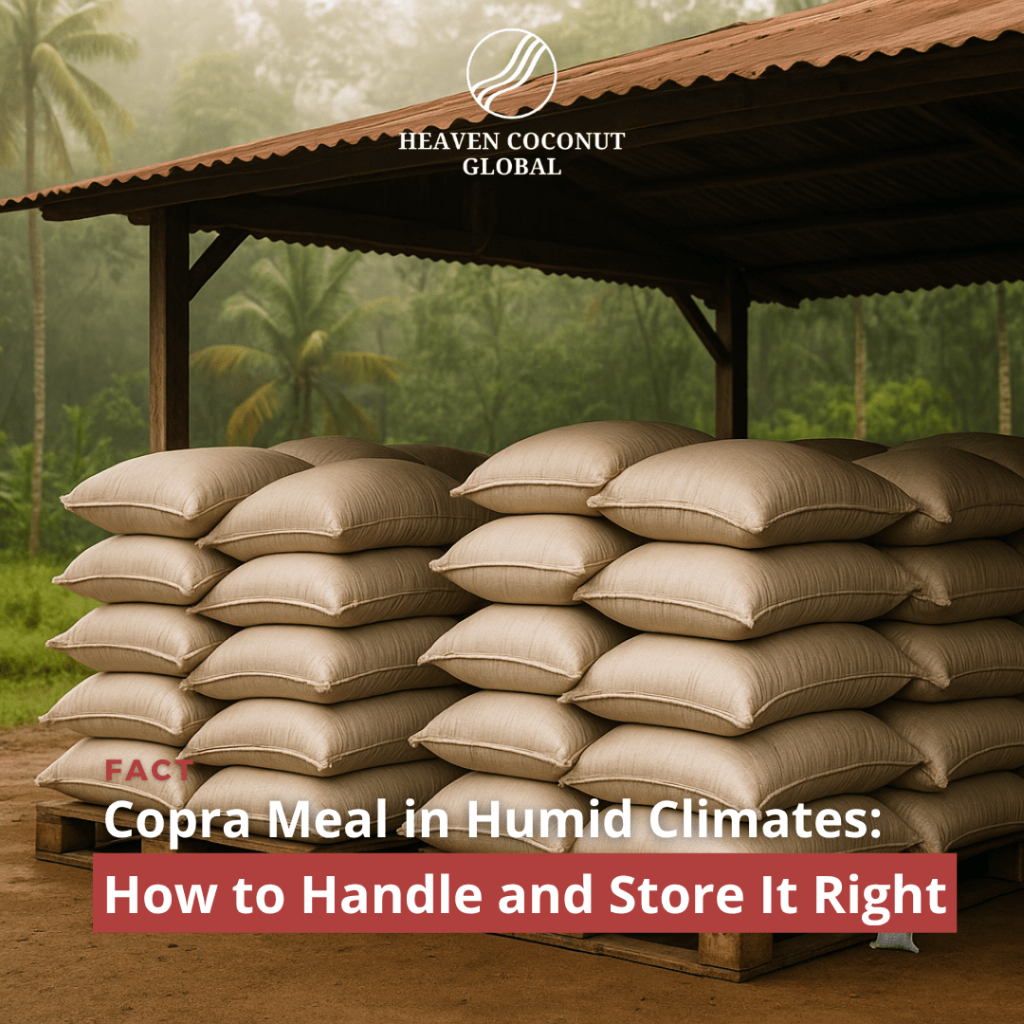
Use of moisture-proof packaging materials such as woven polypropylene bags with inner plastic liners prevents water absorption. Sealing each unit properly helps retain product integrity even in fluctuating humidity levels.
3. Well-Ventilated Storage
Warehouses should be dry, cool, and well-ventilated. Elevating the sacks off the ground using pallets helps prevent condensation and floor moisture from seeping in. Additionally, using dehumidifiers or silica gel packs can offer added protection.
4. FIFO (First In, First Out) Method
To reduce prolonged exposure to moisture, implementing the FIFO system ensures that older stock is used or shipped before newer inventory, minimizing storage time.
5. Regular Monitoring
Routine quality checks—including smell, appearance, and lab tests—help identify early signs of spoilage. Heaven Coconut Global applies these procedures systematically before shipment and upon request by clients.
Shipping Copra Meal Safely in Humid Regions
Exporters must anticipate humidity challenges not only during storage but also in sea freight. Using desiccant packs inside containers, selecting ventilated container types, and minimizing transit time are effective strategies.
Heaven Coconut Global has established SOPs and partnerships with trusted logistics providers to manage all environmental risks during transport—ensuring our copra meal arrives fresh, dry, and ready to use.
Why Choose Heaven Coconut Global?
At Heaven Coconut Global, we take climate factors seriously. As a trusted Indonesian supplier of copra meal, RBD coconut oil, and desiccated coconut, we combine advanced quality control with an understanding of real-world export challenges. Whether your market is in Southeast Asia, the Middle East, or Africa, we guarantee products that meet your quality and safety expectations.
Our copra meal is:
-
Low in moisture
-
High in protein (20-22%)
-
Carefully packed and documented
-
CIF-ready with international shipping support
Final Thoughts
Handling copra meal in humid climates requires a blend of science, experience, and vigilance. From the moment of production to final delivery, proper storage, packaging, and monitoring can make all the difference in preserving quality.
If you’re looking for a reliable supplier who understands how to protect your investment from humidity-related risks, Heaven Coconut Global is ready to serve. Contact us today for samples, specifications, or a custom quote tailored to your market.