How Weather Affects Copra Meal Supply
The copra meal supply chain is highly influenced by weather conditions. As a byproduct of dried coconut kernel processing, copra meal is essential for the animal feed industry. However, unpredictable weather patterns can lead to supply fluctuations and price volatility, affecting businesses that rely on consistent procurement.
In this article, we explain how different weather scenarios affect the supply of copra meal and how importers can mitigate risks by choosing the right supplier—like Heaven Coconut Global.
Seasonal Harvest Cycles
Coconuts, the source of copra, are harvested year-round in tropical countries like Indonesia and the Philippines. However, there are peak and off-peak seasons that directly influence production volume.
-
Peak Harvest Seasons (e.g., March–May and September–November in Indonesia) typically lead to abundant supply and stable pricing.
-
Off-Season or Rainy Months reduce drying efficiency and slow down production.
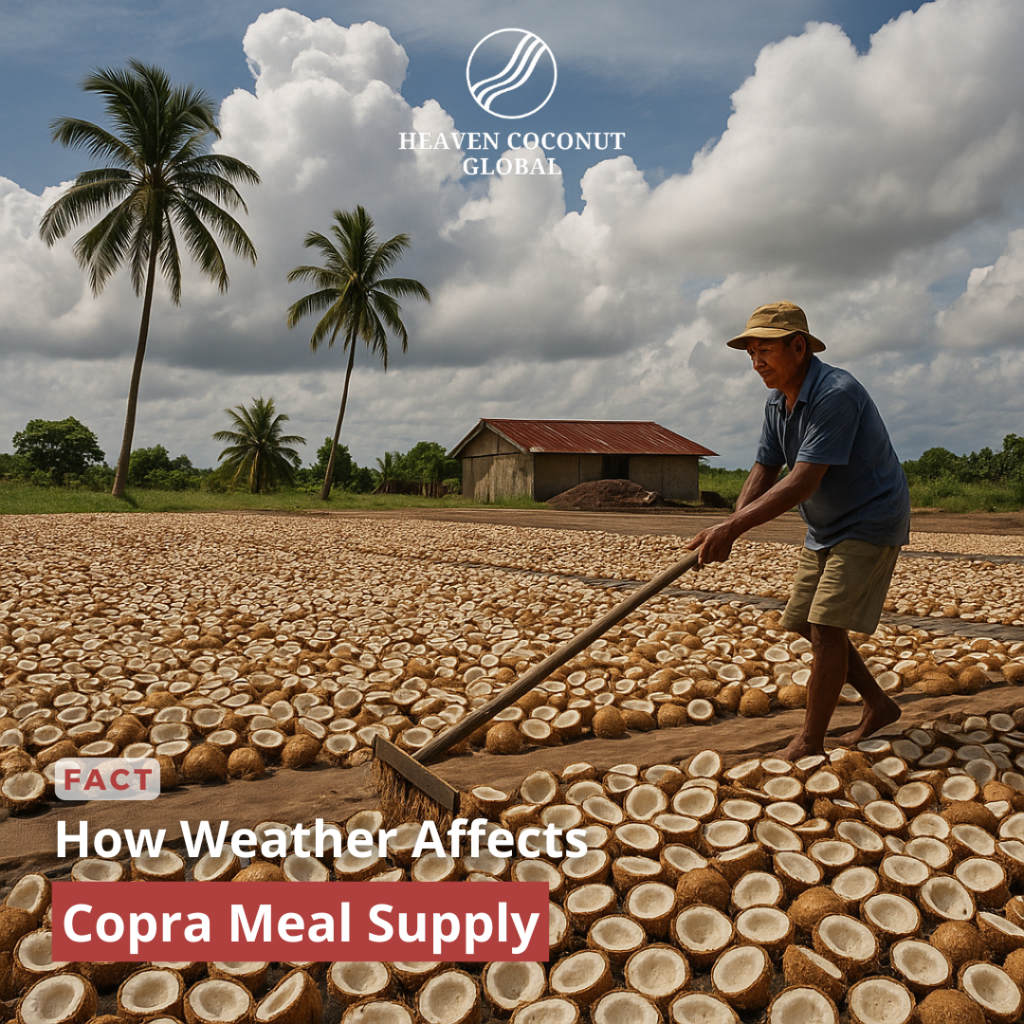
When the climate is dry and sunny, coconut farmers can sun-dry the kernels effectively, producing high-quality copra meal with low moisture. In contrast, wet conditions force producers to use artificial drying or face spoilage, which increases costs and reduces yield.
Impact of Rainfall and Humidity
High rainfall and humidity levels can delay the drying of copra, which negatively affects the copra meal supply. The major consequences include:
-
Delayed production and shipping schedules
-
Increased risk of mold and contamination
-
Reduced quality and nutritional value
For buyers, this often translates to limited availability and fluctuating pricing. Logistics can also be impacted, especially when roads become inaccessible in rural coconut-producing areas.
Extreme Weather Disruptions
Typhoons, floods, and droughts have long-term effects on coconut plantations. Damaged trees may take years to recover, while infrastructure damage can cut off access to key farming regions.
For example:
-
A major typhoon in the Philippines can decrease national coconut output for an entire quarter.
-
Flooding in coastal areas of Indonesia can delay shipments by weeks.
These events create a ripple effect that restricts global supply and spikes international prices.
Smart Sourcing with Heaven Coconut Global
To avoid business disruptions caused by weather-related supply issues, it’s critical to work with an experienced supplier that understands the regional climate and has a diverse sourcing network.
At Heaven Coconut Global, we:
-
Maintain close relationships with coconut farmers in multiple Indonesian provinces
-
Monitor weather patterns to forecast supply volumes
-
Offer alternative ports and routes during heavy weather seasons
-
Ensure consistent quality even during off-peak periods
By spreading our sourcing base and managing real-time logistics, we help our buyers stay prepared, even in unpredictable conditions.
Conclusion
Weather is one of the most significant variables in the copra meal supply chain. From seasonal rainfall to climate disasters, it shapes production capacity, product quality, and price trends. But by partnering with a reliable and climate-aware supplier like Heaven Coconut Global, businesses can protect their operations from these risks and secure a steady supply of premium copra meal.