Desiccated coconut fat content is one of the most important factors international buyers must understand when sourcing coconut ingredients for food manufacturing. Different fat levels directly affect product texture, flavor, shelf life, and production performance. Without a clear understanding of fat content differences, buyers risk choosing the wrong specification for their application.
In the global food ingredient market, desiccated coconut is used across a wide range of applications—from bakery and confectionery to ready-to-eat products and food service. One of the most common questions international buyers ask is:
Should we choose high fat or low fat desiccated coconut?
The answer is not simply about preference or price. Choosing the wrong type of desiccated coconut can affect product texture, flavor, shelf life, and even production efficiency. Understanding the differences between high fat and low fat desiccated coconut helps buyers make better sourcing decisions and avoid costly mistakes.
Understanding Fat Content in Desiccated Coconut
Fat content refers to the natural coconut oil remaining in the coconut meat after processing.
In general:
-
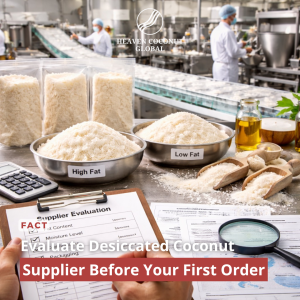
High Fat Desiccated Coconut: typically contains more than 60% fat
-
Low Fat Desiccated Coconut: usually contains less than 30% fat
-
Some markets also use medium fat ranges (around 40–55%)
Each type serves different functional purposes in food manufacturing.
High Fat Desiccated Coconut: When Is It the Right Choice?
High fat desiccated coconut is preferred when flavor, richness, and mouthfeel are important.
Common Applications:
-
Bakery products (cakes, cookies, pastries)
-
Confectionery and chocolate coatings
-
Ice cream inclusions
-
Premium snack products
Key Benefits:
-
Stronger coconut aroma and taste
-
Better moisture retention in baked goods
-
Richer texture and improved mouthfeel
Because of its higher oil content, high fat desiccated coconut often delivers a more consistent sensory profile in finished products. This makes it popular among manufacturers targeting premium or indulgent food segments.
However, buyers should also consider storage and handling, as higher fat content requires proper moisture control and packaging to maintain stability during long-distance shipping.
Low Fat Desiccated Coconut: When Does It Make More Sense?
Low fat desiccated coconut is commonly used in applications where oil content must be controlled or reduced.
Common Applications:
-
Breakfast cereals and granola
-
Health-oriented food products
-
Certain snack bars
-
Dry mixes and coatings where oil migration must be minimized
Key Benefits:
-
Longer shelf life in some applications
-
Reduced oil release during processing
-
Better compatibility with low-fat or calorie-conscious formulations
Low fat desiccated coconut is often more stable in dry environments and may be preferred in formulations that require extended shelf life without affecting texture.
Common Buyer Mistakes When Choosing Fat Content
One of the most frequent mistakes buyers make is choosing desiccated coconut based on price alone, without considering end-use application.
Typical issues include:
-
Using low fat desiccated coconut in bakery products, resulting in dry texture
-
Selecting high fat desiccated coconut for cereal products where oil migration becomes a problem
-
Not aligning fat content with production process requirements
These mistakes can lead to reformulation costs, customer complaints, or inconsistent product quality.
Why Supplier Guidance Matters
A reliable desiccated coconut supplier does more than provide a price quote. They help buyers:
-
Match fat content to specific applications
-
Ensure consistency across shipments
-
Communicate realistic specifications
-
Maintain quality through proper packaging and documentation
Clear communication between buyer and supplier reduces misunderstandings and supports long-term cooperation.
So, Which One Do Buyers Actually Need?
There is no universal answer.
-
High fat desiccated coconut is ideal for products where flavor, richness, and texture are priorities.
-
Low fat desiccated coconut works better for dry, health-focused, or shelf-stable applications.
The right choice depends on how the product will be used, not simply on fat percentage.
Final Thoughts
Choosing between high fat and low fat desiccated coconut is a strategic decision that directly impacts product performance and customer satisfaction. International buyers who understand these differences are better positioned to source effectively and build long-term supply relationships.
At Heaven Coconut Global, our focus on desiccated coconut is driven by the need for clarity, consistency, and application-based sourcing. Helping buyers choose the right specification is a key part of building reliable international trade partnerships.