Desiccated coconut is a crucial ingredient for bakery, confectionery, snacks, beverages, plant-based foods, and many industrial applications worldwide. With rising global demand, manufacturers must ensure they are sourcing high-quality, safe, and consistent products. Understanding the right desiccated coconut quality indicators helps buyers avoid production issues, maintain food safety, and achieve consistent performance in their final products.
This guide explains the most important factors to check before buying desiccated coconut—whether you need High-Fat, Low-Fat, Fine, or Medium grades.
1. Fat Content Level
The first and most critical quality indicator is fat content, because it directly affects flavor, aroma, and texture.
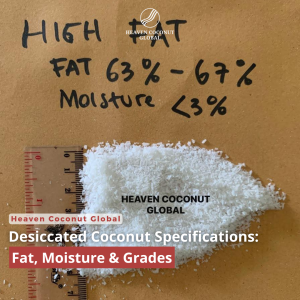
High-Fat Desiccated Coconut (>63% Fat)
-
Strong aroma
-
Creamy and rich flavor
-
Softer texture
-
Ideal for premium bakery, desserts, snacks, and chocolate fillings
Low-Fat Desiccated Coconut (28–55% Fat)
-
Lighter coconut taste
-
Drier and firmer texture
-
More cost-efficient
-
Suitable for cereals, coatings, and high-volume production
Always confirm fat content on the COA (Certificate of Analysis) to ensure consistency.
2. Color and Appearance
High-quality desiccated coconut should have a natural white color with minimal discoloration. Indicators of good visual quality:
-
Clean, bright white
-
No yellowish or grayish tone
-
Uniform particle size
Discolored products may indicate:
-
Poor raw material
-
Excessive heat exposure
-
Poor storage
-
Improper drying techniques
Color consistency is especially important for export-grade and premium bakery applications.
3. Aroma and Flavor
Fresh desiccated coconut has a natural, sweet, and clean coconut aroma.
Avoid products that smell:
-
Rancid
-
Sour
-
Smoky
-
Chemical or artificial
Unpleasant aroma is a sign of oxidation, poor drying methods, or low-quality raw materials.
4. Moisture Content
Moisture is a major factor affecting shelf life and microbiological safety.
The recommended moisture level for export-grade desiccated coconut is:
-
Max 3% moisture
A moisture content above 3% increases the risk of:
-
Mold growth
-
Clumping
-
Reduced shelf life
-
Microbial contamination
Always verify moisture on the COA before purchasing.
5. Microbiological Standards
Food safety is non-negotiable. Ensure the product meets international microbiological standards, typically seen in COA or third-party testing.
Key parameters include:
-
Total Plate Count (TPC)
-
Yeast & Mold Count
-
E. coli
-
Salmonella (must be negative)
-
Coliform
Premium suppliers often provide additional testing through SGS, Intertek, or independent labs.
6. Particle Size: Fine vs. Medium
Depending on your product needs, choose the correct cut:
Fine Grade
-
More powdery
-
Better for chocolate fillings, beverages, confectionery, biscuits
Medium Grade
-
Visible granules
-
Ideal for toppings, snacks, cereals, and coatings
Particle size affects texture and appearance in your final product, so ensure consistency between batches.
7. Certifications and Compliance
Trusted suppliers often provide:
-
HACCP
-
ISO
-
GMP
-
Halal
-
Kosher (optional)
-
Organic certification (if required)
These certifications indicate strong food safety practices and international compliance.
8. Packaging and Shelf Life
High-quality desiccated coconut should be packed in:
-
Strong, food-grade polybags
-
25 kg sacks (standard)
-
Sealed to prevent moisture absorption
Shelf life is typically 12–24 months, depending on storage conditions.
Always check for:
-
Proper labeling
-
Production date
-
Batch number
-
Country of origin
Conclusion
Choosing the right desiccated coconut quality indicators ensures safe, consistent, and high-performing ingredients for your production. By checking fat content, color, aroma, moisture, microbiology, particle size, certifications, and packaging, you can confidently source premium desiccated coconut from reliable suppliers.
For manufacturers looking to secure high-quality High-Fat or Low-Fat Desiccated Coconut, Indonesia remains one of the most trusted origins in the global market