Desiccated Coconut for Bakery, Confectionery, and Ice Cream: Quality Standards You Must Know
Desiccated coconut is a versatile ingredient widely used in the bakery, confectionery, and ice cream industries. Known for its distinctive aroma, pleasant texture, and natural sweetness, it enhances both the flavor and visual appeal of many products. However, to achieve consistent results and meet customer expectations, it is crucial to understand the quality standards for desiccated coconut. Whether you are a bakery owner, a confectionery producer, or an ice cream manufacturer, knowing these standards can help you choose the right product for your business.
1. Understanding Desiccated Coconut
Desiccated coconut is made from fresh, mature coconut meat that is grated, dried, and processed to remove most of its moisture content, usually to below 3%. This low moisture level ensures a longer shelf life while preserving the product’s nutritional value and natural flavor.
It is available in different grades and cuts, such as fine, medium, and extra-fine, to suit various applications. For example, medium cuts are often used in baked goods for added texture, while fine cuts are preferred in confectionery and ice cream for smooth blending.
2. Key Quality Standards
When sourcing desiccated coconut for industrial use, these are the most important quality parameters to look for:
a. Moisture Content
-
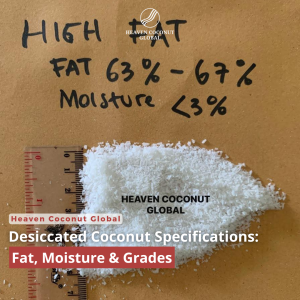
Moisture should not exceed 3%. A low moisture level prevents microbial growth and extends shelf life.
b. Oil Content
-
High-fat desiccated coconut (60–65% oil) delivers richer flavor and texture.
-
Low-fat desiccated coconut (around 50% oil) is lighter and suitable for certain health-focused recipes.
c. Color and Appearance
-
The product should be white to off-white, free from discoloration or burnt specks.
-
Uniformity in size and cut ensures consistency in your end products.
d. Taste and Aroma
-
Should have a fresh, sweet, and nutty coconut taste without any off-flavors.
-
No rancid or sour smell, which indicates spoilage or poor storage.
e. Microbiological Standards
-
Should comply with international food safety regulations, including low total plate count, absence of E. coli, Salmonella, and other pathogens.
3. Applications in Bakery, Confectionery, and Ice Cream
Bakery Products
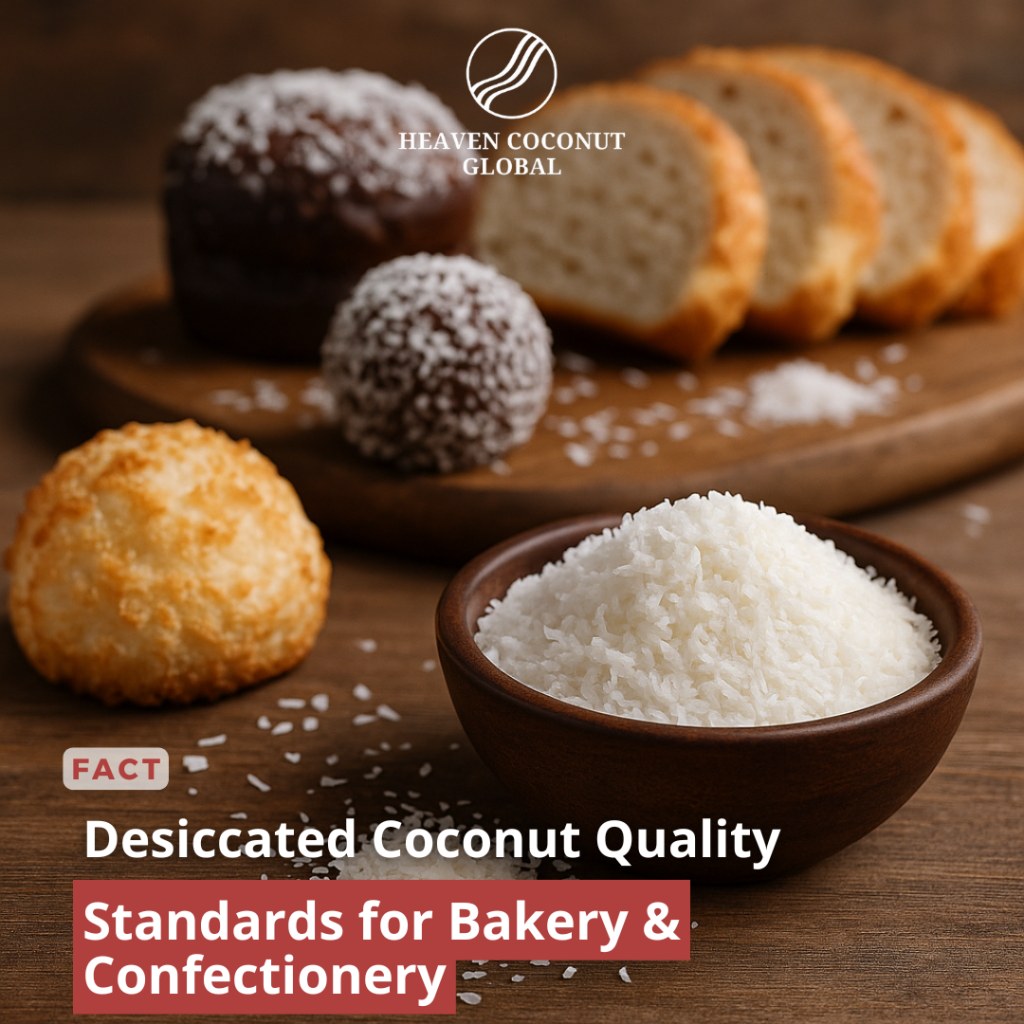
Desiccated coconut can be used in cakes, muffins, bread, and cookies to add a tropical flavor and appealing texture. It can be incorporated into the batter or used as a topping.
Confectionery
In confectionery, desiccated coconut is ideal for coating chocolates, truffles, and energy bars. Fine-grade coconut offers a smooth texture that blends easily with sugar, milk, or syrups.
Ice Cream and Frozen Desserts
When added to ice cream, desiccated coconut provides a creamy crunch and unique flavor. Fine cuts are preferred for even distribution, while medium cuts can be used for specialty textures.
4. Storage and Handling
Proper storage is essential to maintain quality. Desiccated coconut should be stored in a cool, dry place, away from direct sunlight and strong odors. Once opened, it should be kept in an airtight container to prevent moisture absorption.
5. Why Quality Matters
Using premium desiccated coconut ensures product consistency, better taste, and customer satisfaction. For businesses, it also reduces the risk of spoilage, returns, and compliance issues with export regulations. Partnering with a reliable supplier who adheres to strict quality controls can save costs in the long run and strengthen your brand reputation.
Conclusion
Desiccated coconut is more than just a flavor enhancer; it is a functional ingredient that can transform bakery, confectionery, and ice cream products. By understanding and following quality standards—moisture content, oil levels, appearance, aroma, and safety—you can select the right product for your needs and consistently deliver high-quality results to your customers.
If you are looking for premium-grade desiccated coconut for your business, Heaven Coconut Global supplies high-quality, sustainably sourced coconut products that meet international standards for taste, safety, and consistency.