How to Evaluate Desiccated Coconut Quality Before Importing
Importing desiccated coconut can be a profitable opportunity for food manufacturers, distributors, and importers. However, selecting the right supplier requires more than simply comparing prices. To avoid quality issues, shipment disputes, and customer complaints, buyers must know how to evaluate desiccated coconut quality before importing.
A thorough evaluation process helps ensure that the product meets your specifications, complies with food safety standards, and performs consistently in your intended application. Whether you are sourcing for bakery products, confectionery, snacks, dairy products, or food processing, understanding the key quality indicators is essential for making informed purchasing decisions.
Why It Is Important to Evaluate Desiccated Coconut Quality Before Importing
The quality of desiccated coconut directly affects the final product’s taste, texture, shelf life, and consumer acceptance. Poor-quality material can lead to production issues, inconsistent product performance, and financial losses.
When buyers take time to evaluate desiccated coconut quality before importing, they can:
- Reduce quality-related risks
- Ensure product consistency
- Meet customer expectations
- Comply with food safety regulations
- Build long-term supplier relationships
- Protect brand reputation
A structured quality assessment process is therefore a critical part of successful sourcing.
Check the Product Grade
One of the first steps to evaluate desiccated coconut quality before importing is understanding the available grades.
The most common grades include:
Fine Grade
Fine grade has smaller particle sizes and is widely used in:
- Cakes
- Biscuits
- Fillings
- Chocolate products
- Ice cream applications
Medium Grade
Medium grade contains larger particles and is commonly used in:
- Bakery products
- Toppings
- Cereals
- Snack products
- Confectionery items
Buyers should confirm that the selected grade matches their production requirements.
Review Moisture Content
Moisture content is one of the most important specifications in desiccated coconut.
Excessive moisture may increase the risk of:
- Microbial growth
- Reduced shelf life
- Product deterioration during storage
Most quality desiccated coconut products maintain moisture levels within industry standards to ensure product stability and safety.
Before placing an order, request the product specification sheet and verify the moisture content listed by the supplier.
Verify Fat Content
Fat content significantly influences flavor, texture, and application performance.
The two main categories are:
High Fat Desiccated Coconut
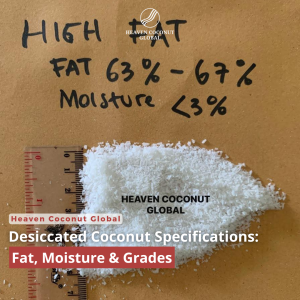
Typically contains approximately 60% to 68% fat and is preferred for products requiring rich flavor and texture.
Applications include:
- Premium bakery products
- Chocolate manufacturing
- Confectionery products
Low Fat Desiccated Coconut
Contains reduced fat levels and is often used in applications where lower oil content is preferred.
Applications include:
- Cereals
- Health-oriented products
- Certain snack formulations
Understanding fat content helps buyers select the most suitable product for their target market.
Examine Color and Appearance
Visual appearance provides valuable information about product quality.
High-quality desiccated coconut should generally have:
- A clean white color
- Uniform particle size
- No visible contamination
- No signs of discoloration
Significant color variations may indicate processing issues, storage problems, or inconsistent raw materials.
Many professional buyers request product samples before approving a supplier.
Request a Certificate of Analysis (COA)
A Certificate of Analysis (COA) is one of the most important documents buyers should review before importing.
A typical COA may include:
- Moisture content
- Fat content
- Free fatty acid levels
- Particle size
- Microbiological results
- Product appearance
The COA allows buyers to verify that the product meets agreed specifications before shipment.
When evaluating suppliers, always ask for recent COAs from production batches.
Review Microbiological Standards
Food safety is a critical consideration when importing food ingredients.
To properly evaluate desiccated coconut quality before importing, buyers should verify microbiological specifications such as:
- Total Plate Count
- Yeast and Mold
- Coliform
- E. coli
- Salmonella
Products that meet international food safety standards are more likely to satisfy regulatory requirements in destination markets.
Reliable suppliers regularly conduct laboratory testing and maintain strict quality control procedures.
Assess Packaging Quality
Packaging plays a major role in protecting product quality during transportation and storage.
Good packaging should:
- Prevent moisture absorption
- Protect against contamination
- Maintain product freshness
- Withstand international shipping conditions
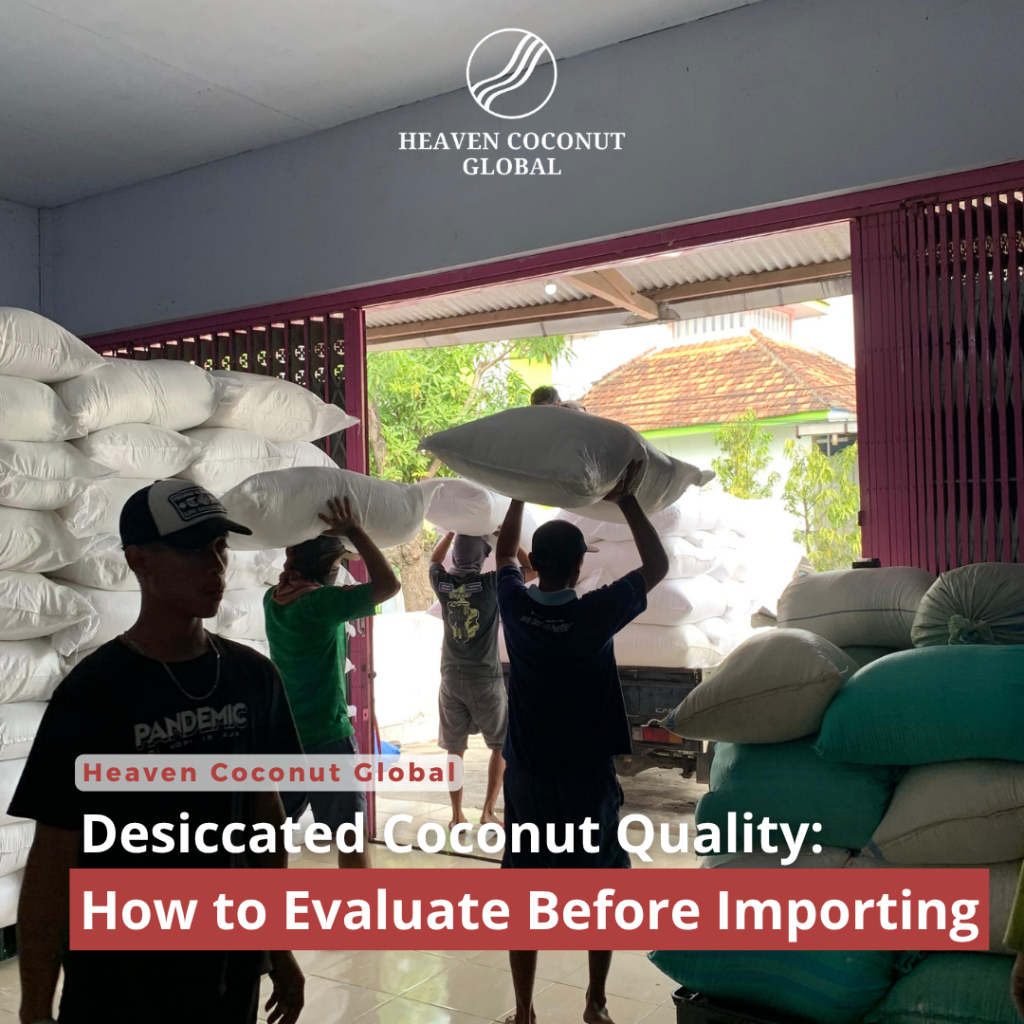
Many exporters use food-grade multi-layer bags specifically designed for export shipments.
Buyers should confirm packaging specifications before placing large orders.
Evaluate Supplier Reliability
Even if the product quality is excellent, supplier reliability remains equally important.
When choosing a supplier, consider:
- Production capacity
- Export experience
- Quality management systems
- Delivery performance
- Communication responsiveness
- Documentation support
A reliable supplier can help minimize delays and ensure consistent product availability.
Long-term partnerships often provide greater value than selecting suppliers solely based on the lowest price.
Request Product Samples
One of the most effective ways to evaluate desiccated coconut quality before importing is by testing product samples.
Sample evaluation allows buyers to assess:
- Flavor
- Aroma
- Texture
- Color
- Product performance in actual production
Many experienced importers conduct laboratory testing and production trials before finalizing large-volume purchases.
This step can significantly reduce sourcing risks.
Conclusion
Understanding how to evaluate desiccated coconut quality before importing is essential for food manufacturers, distributors, and importers seeking reliable supply and consistent product performance. By reviewing product grades, moisture content, fat content, microbiological standards, packaging quality, and supplier reliability, buyers can make informed sourcing decisions and reduce potential risks.
Investing time in quality evaluation before placing an order can help ensure smoother transactions, stronger supplier relationships, and higher customer satisfaction in the long run.
Looking for a Reliable Desiccated Coconut Supplier?
Heaven Coconut Global works with experienced production partners to supply high-quality Indonesian desiccated coconut for food manufacturers, distributors, and importers worldwide. We support buyers with product specifications, quality documentation, samples, and export assistance to help ensure successful sourcing and long-term business cooperation.