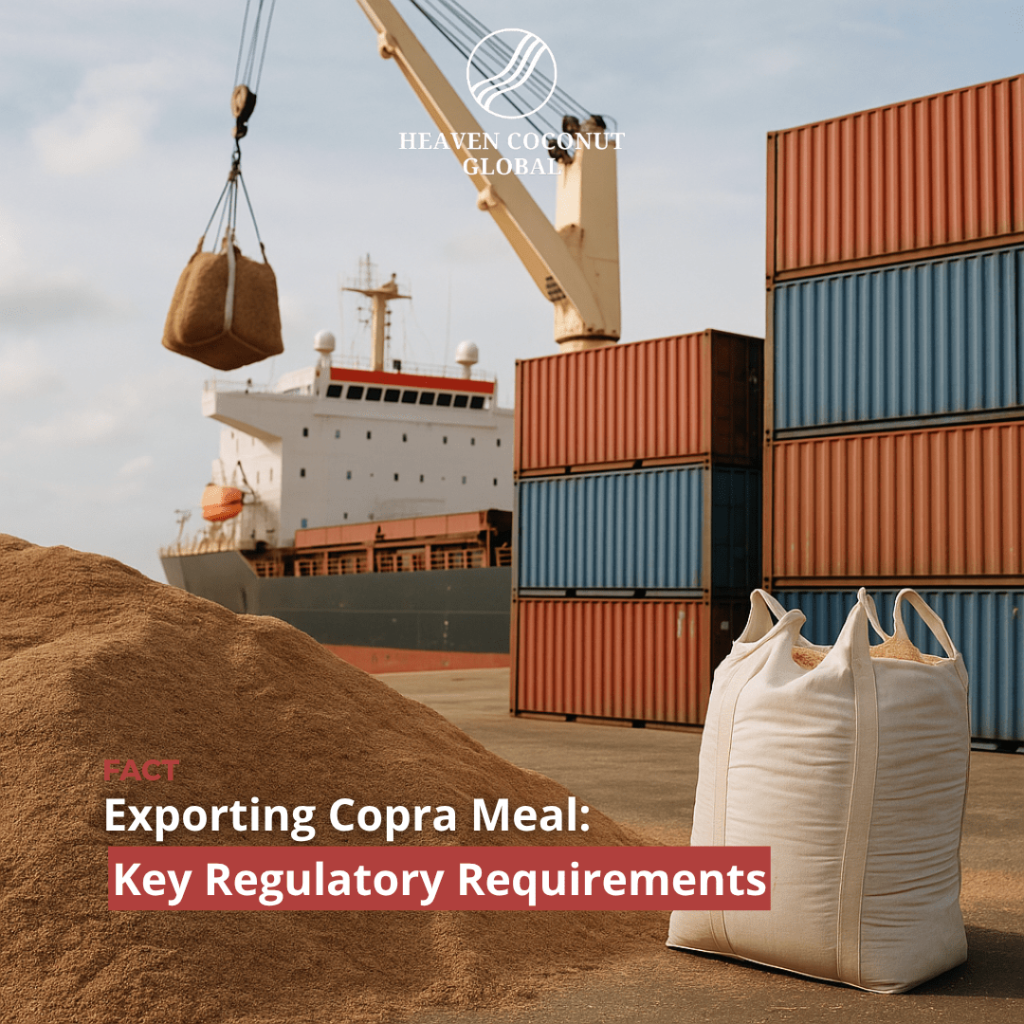
Copra meal, a high-protein byproduct of coconut oil extraction, is in growing demand worldwide—particularly in the animal feed industry. However, exporting copra meal is not simply a matter of packaging and shipping; it requires strict adherence to a range of regulatory requirements imposed by both exporting and importing countries. This guide breaks down the key regulatory requirements for exporting copra meal, ensuring a smooth, compliant, and efficient international trade process.
1. Product Classification and HS Code
The first step in exporting copra meal is classifying the product correctly under the Harmonized System (HS). The commonly used HS Code for copra meal is 2306.50. This code is essential for determining applicable duties, documentation, and trade policies in the destination country.
At Heaven Coconut Global, we ensure that all documentation reflects the correct product classification to avoid customs delays or penalties.
2. Export Documentation
Proper documentation is the backbone of any successful export operation. The required documents generally include:
-
Commercial Invoice
-
Packing List
-
Bill of Lading
-
Certificate of Origin
-
Phytosanitary Certificate (depending on the destination)
-
Material Safety Data Sheet (MSDS)
-
Certificate of Analysis (COA)
Heaven Coconut Global provides complete, accurate, and timely documentation for each shipment, tailored to the buyer’s country-specific requirements.
3. Quality Standards and Product Specifications
Many countries require that imported copra meal meets certain quality standards, particularly when used in livestock feed. Parameters such as:
-
Moisture content
-
Protein levels
-
Fiber content
-
Oil residue
-
Aflatoxin levels
must fall within an acceptable range. For example, copra meal with moisture above 12% may be rejected at port due to spoilage risks.
At Heaven Coconut Global, we offer lab-tested copra meal with protein content up to 22%, moisture below 10%, and safe levels of aflatoxin—meeting international feed-grade standards.
4. Country-Specific Import Regulations
Different countries have different import restrictions or certifications for animal feed products. For instance:
-
Saudi Arabia and other GCC countries often require Halal certification and phytosanitary clearance.
-
EU countries may demand compliance with Feed Hygiene Regulations (EC No 183/2005).
-
China might require additional quarantine inspections and registrations.
Heaven Coconut Global stays updated with evolving international regulations to ensure your product reaches its destination without regulatory hurdles.
5. Packaging and Labeling Compliance
Packaging should protect the product from contamination and moisture during transit. Standard export packaging includes:
-
PP woven bags (typically 50kg or 25kg)
-
Proper sealing and palletization
-
Clear labeling with batch number, origin, net weight, and manufacturer’s details
Our team at Heaven Coconut Global ensures all shipments are professionally packaged and labeled according to importer country regulations.
6. Logistics and Incoterms
Understanding Incoterms (e.g., FOB, CIF, CFR) is essential for determining the responsibilities and liabilities between the exporter and importer. When buyers choose CIF (Cost, Insurance, and Freight), we handle:
-
Inland transportation
-
Sea freight booking
-
Marine insurance
-
Export customs clearance
Heaven Coconut Global provides end-to-end export services, including CIF shipping to major ports worldwide—making international trade easier for our clients.
7. Sustainability and Environmental Compliance
As environmental concerns rise, some countries now require proof of sustainable sourcing or eco-friendly processing. While not mandatory in all markets, this trend is growing—especially in Europe and North America.
Heaven Coconut Global is committed to sustainable coconut processing and works closely with local farmers to ensure eco-responsible sourcing of raw materials.
Why Choose Heaven Coconut Global?
With years of experience in coconut product exports, Heaven Coconut Global is a trusted Indonesian supplier of premium copra meal, RBD coconut oil, and desiccated coconut. When you choose us, you benefit from:
-
✔️ Export-ready documentation
-
✔️ Internationally accepted quality standards
-
✔️ Efficient logistics management
-
✔️ Dedicated customer support
-
✔️ Custom labeling and packaging
Whether you’re an animal feed distributor in the Middle East, a buyer in Europe, or a feed mill in Asia, we ensure that your shipment complies with all regulatory requirements for exporting copra meal—from our warehouse to your port.
Conclusion: Exporting Copra Meal Made Easy with Heaven Coconut Global
Exporting copra meal can be a challenging task without expert guidance. From documentation and compliance to logistics and quality assurance, every detail counts. That’s why global buyers trust Heaven Coconut Global—a leading Indonesian exporter with a proven track record of regulatory compliance and premium product quality.
Whether you’re expanding your business or securing a new supplier, we make sure your copra meal shipments meet international requirements with zero hassle