Desiccated Coconut (DC) is widely used across bakery, confectionery, snack manufacturing, and food production. As global demand grows for natural and plant-based ingredients, DC continues to be a top choice for many manufacturers. However, choosing the right fat content—High-Fat vs Low-Fat Desiccated Coconut—is crucial to ensuring your final product has the ideal taste, texture, binding ability, and cost structure.
This article explains the key differences between both types, helping you decide which one fits your product needs.
1. What Makes High-Fat Desiccated Coconut Special?
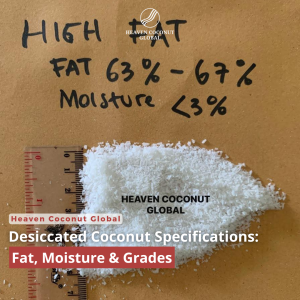
High-Fat Desiccated Coconut typically contains above 63% fat, giving it a rich, creamy profile. Because more natural coconut oil is retained during processing, this type delivers a strong and aromatic coconut flavor.
Characteristics of High-Fat DC:
-
Stronger and creamier flavor
-
Softer texture
-
Naturally more aromatic
-
Excellent binding ability
-
Whiter, premium appearance
High-Fat DC is commonly available in Fine Grade and Medium Grade, depending on the desired granulation.
Best Uses:
High-Fat DC is ideal for products where coconut flavor is the highlight. It works well in:
-
Premium bakery items such as cookies, cakes, and croissants
-
Chocolate and confectionery fillings
-
Ice cream and frozen desserts
-
Energy bars and granola
-
Coconut beverages
-
Vegan desserts and plant-based snacks
If your product needs maximum flavor, aroma, and creaminess, High-Fat DC is the most suitable option.
2. What Defines Low-Fat Desiccated Coconut?
Low-Fat Desiccated Coconut contains about 28–30% fat or 44–55% fat depending on the grade. This reduced fat level comes from pressing the coconut meat to remove some of the natural oil before drying.
Characteristics of Low-Fat DC:
-
Lighter coconut flavor
-
Drier texture
-
Firmer bite
-
Slightly duller color compared to high-fat
-
More economical price
Low-Fat DC is popular among manufacturers looking to maintain coconut taste while controlling cost and adjusting product texture.
Best Uses:
Low-Fat DC performs excellently in:
-
Snack manufacturing
-
Bakery mixes and industrial blends
-
Savory applications (fish/shrimp coatings, snack crumbs)
-
Cereal and extruded snacks
-
Products where coconut is not the main highlight
-
High-volume, cost-sensitive production
If your product requires a lighter coconut profile or drier consistency, or if cost control is important, Low-Fat DC is the better choice.
3. The Key Differences Explained Clearly
When comparing High-Fat vs Low-Fat Desiccated Coconut, the main distinctions come from fat content, which directly affects flavor, texture, function, and cost.
Flavor
High-Fat offers a deeper, richer coconut flavor because of the high oil content. Low-Fat delivers a mild taste more suitable for supporting roles in formulations.
Texture
High-Fat DC is soft and creamy. Low-Fat DC is drier and slightly harder, making it suitable for crunchy mixes or coatings.
Aroma
High-Fat DC has a natural, stronger coconut aroma, while Low-Fat has a lighter scent.
Functionality
For binding, such as in snack bars or chocolate fillings, High-Fat performs better due to its natural oil. Low-Fat works best when a firm or dry texture is needed.
Pricing
High-Fat DC is typically more expensive because of higher oil content. Low-Fat DC is more budget-friendly for large-scale production.
4. Which One Fits Your Product?
Choosing between High-Fat and Low-Fat DC depends on your product’s goals:
Choose High-Fat DC if you want:
-
Strong coconut flavor
-
Creamy texture
-
Premium product positioning
-
Better binding and mouthfeel
-
Aromatic, clean-label taste
Choose Low-Fat DC if you want:
-
Cost-efficient production
-
Slightly dry or crunchy texture
-
Light coconut notes
-
Higher stability for mixes and savory applications
-
Bulk formulations with large production volumes
Conclusion
Understanding the difference between High-Fat vs Low-Fat Desiccated Coconut helps manufacturers make smarter ingredient choices. High-Fat DC provides richness, aroma, and premium texture, making it ideal for high-value bakery and confectionery products. Low-Fat DC supports cost efficiency, dryness, and versatility for savory or high-volume applications.
Both are valuable—what matters is choosing the right type for your specific product vision and functional needs.