How Buyers Can Reduce Risk When Importing Desiccated Coconut for the First Time
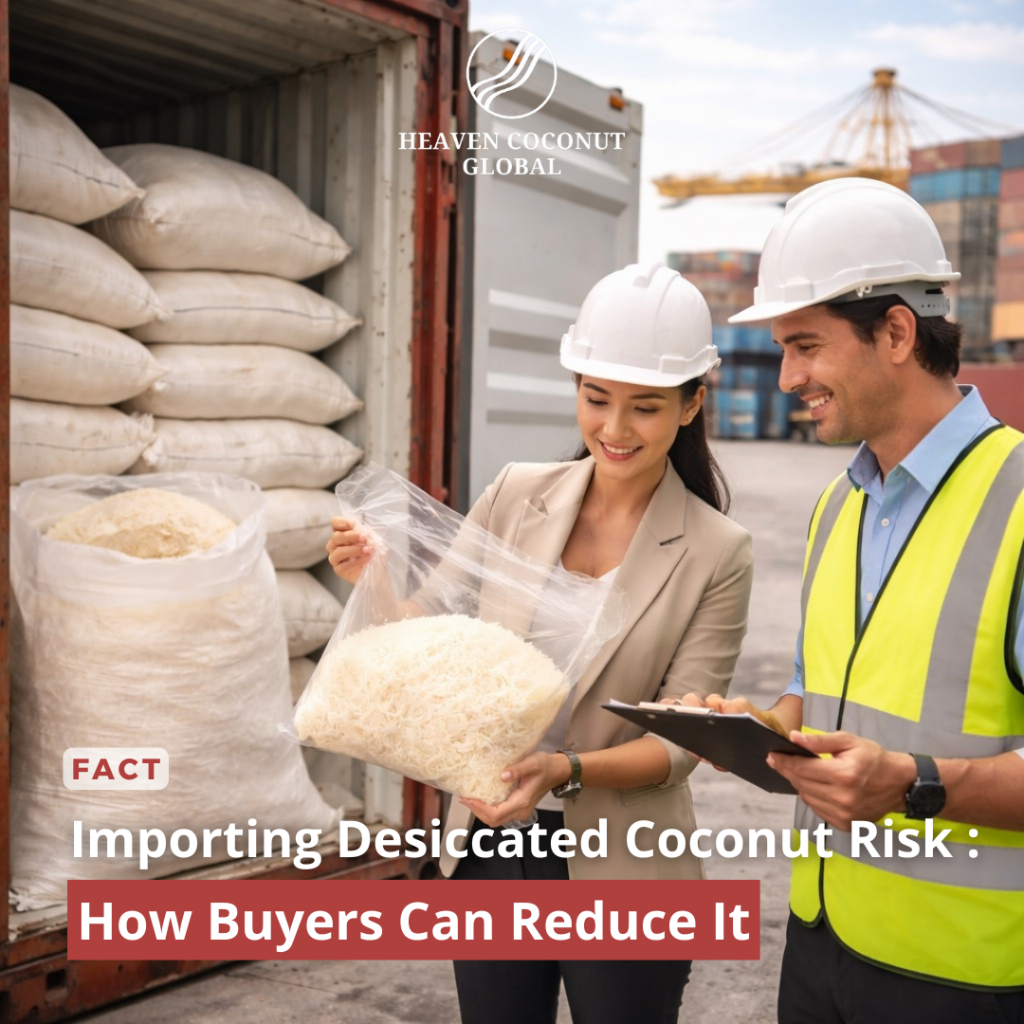
Importing desiccated coconut risk is one of the main concerns for international buyers placing their first order, especially when specifications, packaging, and supplier reliability are not clearly defined.
In 2026, buyers are increasingly focused on reducing risk rather than chasing the lowest price. Understanding where risks usually occur — and how to prevent them — helps buyers build more reliable and sustainable supply chains.
1. Start with Clear Product Specifications
One of the most common sources of risk is unclear product specifications. Buyers should define requirements clearly before requesting quotations.
Important specifications include:
-
Fat content range (high, medium, or low)
-
Particle size (fine or medium)
-
Moisture limits
-
Shelf life expectations
Clear specifications reduce misunderstandings and ensure suppliers can deliver products that meet application needs.
2. Evaluate Supplier Consistency, Not Just Samples
Many buyers rely heavily on samples. However, samples only represent one batch. The real risk lies in whether the supplier can maintain the same quality across repeated shipments.
Buyers should assess:
-
Quality control processes
-
Production capacity
-
Track record with repeat orders
-
Transparency in communication
Suppliers who focus on long-term consistency are generally more reliable partners.
3. Confirm Packaging Standards Early
Packaging issues remain a major cause of quality complaints in desiccated coconut exports. Moisture ingress and contamination often occur due to inadequate packaging.
Buyers should confirm:
-
Use of inner plastic liners
-
Export-grade outer packaging
-
Proper sealing and stacking methods
Discussing packaging details early helps avoid problems during transit.
4. Verify Export Documentation Readiness
Documentation errors can delay shipments and increase costs. Before confirming orders, buyers should ensure suppliers are experienced in handling export documents such as:
-
Certificate of Analysis (COA)
-
Health Certificate
-
Phytosanitary Certificate
-
Certificate of Origin
Suppliers familiar with destination requirements reduce customs-related risks.
5. Prioritize Communication and Responsiveness
Clear communication is often underestimated but plays a critical role in risk reduction. Buyers should observe how suppliers respond during early discussions.
Reliable suppliers:
-
Respond clearly and promptly
-
Provide realistic timelines
-
Communicate potential issues in advance
Strong communication builds trust, especially during first transactions.
6. Think Beyond the First Shipment
Successful buyers approach sourcing as a long-term process. Instead of focusing only on the first shipment, they consider:
-
Scalability of supply
-
Stability of raw materials
-
Willingness to support future orders
Suppliers aligned with long-term cooperation tend to prioritize reliability over short-term gains.
Final Thoughts
Reducing risk when importing desiccated coconut starts with preparation, clarity, and supplier evaluation. Buyers who invest time in understanding specifications, packaging, documentation, and communication are better positioned to build stable supply relationships.
At Heaven Coconut Global, we believe that successful sourcing begins long before the first container is shipped. By focusing on risk reduction and transparency, buyers and suppliers can create smoother and more reliable trade partnerships.