How to Choose the Right Grade of Desiccated Coconut
Desiccated coconut is a versatile ingredient used across various industries—especially in bakery, confectionery, snack manufacturing, and even cosmetic formulations. With different grades available in the market, choosing the right grade of desiccated coconut can significantly impact your product’s taste, texture, and overall appeal. Whether you’re a small-scale food producer or a global buyer sourcing in bulk, this guide will help you understand how to select the best option for your specific needs.
Understanding the Grades of Desiccated Coconut
Desiccated coconut typically comes in different grades, primarily based on particle size and oil content. Here are the most common types:
-
Fine Grade: Powdery and smooth in texture, this grade blends easily into batters, doughs, or sauces. It’s often used in cookies, cakes, and as a base for coconut-flavored beverages or fillings.
-
Medium Grade: Slightly coarser than fine, this is the most widely used grade in the food industry. It provides more texture and bite, making it ideal for toppings, energy bars, and snack coatings.
-
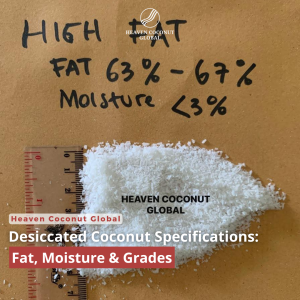
High Fat vs. Low Fat: High-fat desiccated coconut (typically 63% oil content or more) retains a richer coconut flavor and is commonly preferred in premium food products. Low-fat variants (typically below 50% oil) are more stable for long shelf life and industrial uses like cereals or blended mixes.
Key Factors When Choosing the Right Grade
-
End Product Requirements
Consider what you’re making. A coconut chocolate bar needs texture, so a medium grade might work better. For soft, moist pastries, a fine grade might be more appropriate. -
Flavor Intensity
If you’re seeking a stronger coconut aroma and taste, go for high-fat content. For more neutral or blended applications, low-fat is often more suitable. -
Application Process
Will the coconut be baked, mixed, or sprinkled raw? Finer grades integrate better into mixes, while medium grades hold their shape well during baking. -
Shelf Life Needs
If you’re producing items that require long shelf stability, a lower fat grade may help extend the product’s shelf life while minimizing the risk of rancidity. -
Certifications and Safety Standards
Always look for suppliers that comply with international food safety standards—such as HACCP, ISO, or Halal certification—especially if you’re exporting or distributing widely.
Why Quality Matters
Choosing the right grade of desiccated coconut isn’t just a technical detail—it can determine the success of your final product. Texture, flavor consistency, and freshness all rely on selecting the grade that matches your formulation.
At Heaven Coconut Global, we understand how crucial it is for food manufacturers to work with consistent, high-quality ingredients. That’s why we offer a full range of desiccated coconut grades, sourced sustainably from mature Indonesian coconuts, and processed under strict hygiene protocols.
Whether you need a fine grade for confectionery fillings or a high-fat medium grade for bakery toppings, our team can help you choose the best match for your product goals. We also offer custom specifications for bulk buyers and regularly export to clients across the Middle East, Asia, and Europe.
Final Thoughts
The right grade of desiccated coconut can elevate your recipe from ordinary to exceptional. Take time to evaluate your product requirements and consult with an experienced supplier. Investing in quality ingredients is not just about flavor—it’s about building a brand that your customers will trust.
Looking for a reliable supplier of export-quality desiccated coconut?
Contact Heaven Coconut Global today and let’s find the perfect grade for your business.