Preventing Contamination and Damage: Packaging and Shipping Tips for Desiccated Coconut
Desiccated coconut is a high-value product widely used in food processing, baking, and confectionery industries worldwide. However, due to its dry and delicate nature, it is highly susceptible to contamination and physical damage during transport. Proper packaging and shipping practices are crucial to maintain its quality, hygiene, and shelf life throughout the export process.
In this article, we’ll explore essential tips for packaging and shipping desiccated coconut safely and efficiently, ensuring your product reaches its destination in optimal condition.
1. Use Food-Grade, Moisture-Resistant Packaging
To prevent microbial contamination and moisture absorption, always use multilayer food-grade packaging. Recommended materials include:
-
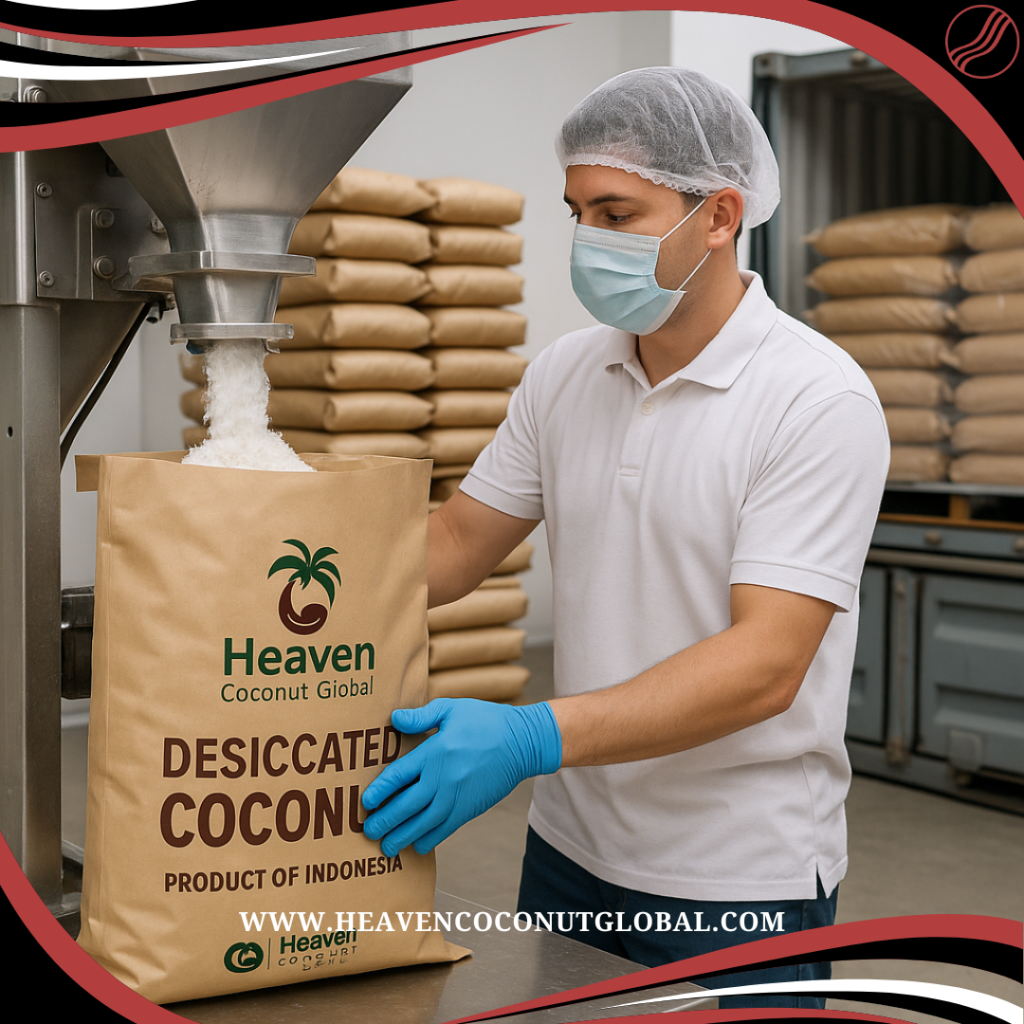
Polyethylene-lined Kraft paper bags
-
PP woven sacks with inner liners
-
Vacuum-sealed or nitrogen-flushed pouches for premium-grade product
Ensure each bag is sealed tightly to block humidity and air exposure during transit.
2. Select Strong, Stackable Outer Packaging
Outer packaging must protect against crushing and tearing during handling. Common solutions include:
-
Corrugated cartons for bulk retail shipments
-
Double-layer PP bags for industrial bulk shipments (25 kg or 50 kg)
-
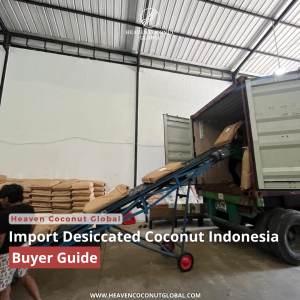
Palletized loads with shrink wrap to stabilize and ease container loading
Heaven Coconut Global uses export-standard packaging to ensure stability during sea freight.
3. Label Each Package Clearly
Proper labeling helps ensure traceability, compliance with import regulations, and accurate handling. Include:
-
Product name and grade (e.g., Fine, Medium)
-
Net weight
-
Production and expiry dates
-
Batch number
-
Country of origin
-
Manufacturer: Heaven Coconut Global – Indonesia
4. Choose the Right Container and Loading Method
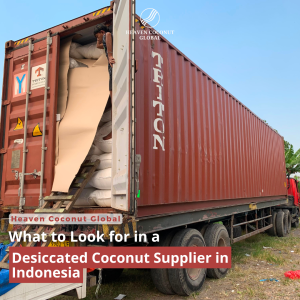
Shipping desiccated coconut usually involves 20ft or 40ft dry containers. Key tips:
-
Use clean, dry, and odor-free containers
-
Avoid mixed loads with chemicals or strongly scented products
-
Use desiccants or moisture absorbers in each container to control humidity
-
Load on pallets and allow air circulation
5. Monitor Temperature and Humidity
Though desiccated coconut is shelf-stable, extreme conditions can cause spoilage. During sea freight:
-
Keep container temperature ideally below 30°C
-
Maintain humidity below 60%
-
Use temperature loggers for long routes or sensitive shipments
6. Work with a Reliable Supplier
Ensuring product safety starts with sourcing from a supplier committed to international food safety standards.
Heaven Coconut Global, a trusted exporter from Indonesia, provides premium-grade desiccated coconut with standardized packaging, HACCP-aligned procedures, and ready global shipment. Whether you need small or bulk quantities, we ensure every shipment arrives in top condition.
Final Thoughts
Careful packaging and smart shipping choices are essential to protect desiccated coconut from contamination and damage. By following the tips above and partnering with experienced suppliers like Heaven Coconut Global, you can maintain product integrity and meet your customers’ highest quality expectations.