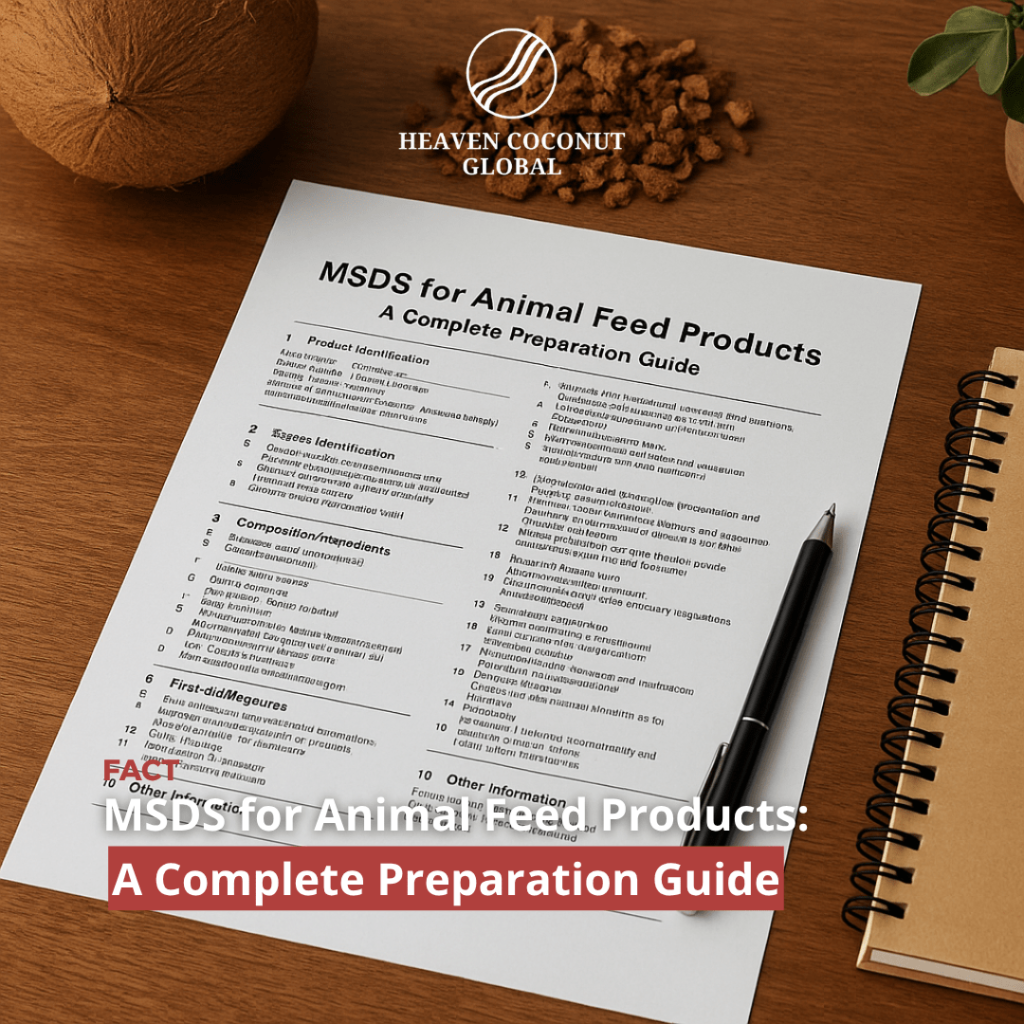
When exporting animal feed products, one essential document that should never be overlooked is the Material Safety Data Sheet (MSDS). It is more than just a regulatory requirement—it is a tool to ensure safety, compliance, and credibility in international trade. Whether you’re shipping copra meal, soybean meal, or other feed ingredients, understanding how to create a proper MSDS is critical.
In this article, we’ll guide you through the step-by-step process of preparing an MSDS for animal feed products, highlight key sections, and explain how companies like Heaven Coconut Global maintain global standards in animal feed documentation.
What is an MSDS?
A Material Safety Data Sheet (MSDS) is a technical document that provides detailed information about a chemical substance or mixture. In the context of animal feed, the MSDS outlines:
-
Physical and chemical properties
-
Hazards and safety measures
-
Handling and storage guidelines
-
Transport classifications
-
Regulatory and environmental data
While animal feed products like copra meal are typically not hazardous, international trade regulations still often require an MSDS to ensure transparency and safety across the supply chain.
Why Is MSDS Important for Animal Feed?
-
International Compliance:
Many countries require an MSDS as part of import documentation for any agricultural or feed product. -
Safe Handling:
Helps ensure safety during transportation, storage, and usage. -
Customs Clearance:
Prevents delays by providing accurate information to customs authorities. -
Transparency with Buyers:
Establishes trust with importers and partners by demonstrating quality control and professionalism.
Step-by-Step Guide to Preparing an MSDS for Animal Feed Products
1. Product Identification
Include the product name, trade name (if any), and relevant identifiers.
Example:
-
Product Name: Copra Meal
-
Synonyms: Coconut Meal, Coconut Cake
-
Company: Heaven Coconut Global
-
Emergency Contact: [Insert contact]
2. Hazard Identification
Even if the product is considered non-hazardous, state it clearly. If applicable, mention dust-related respiratory irritation or allergenic potential.
Example:
-
Classification: Non-hazardous under GHS
-
Hazard Statement: May cause mild respiratory irritation in dusty environments.
3. Composition / Ingredients
Detail the composition of the feed product. Use standard units and terminology.
Example:
-
Ingredient: Copra Meal
-
CAS Number: Not applicable (natural product)
-
Purity: 100% dried, mechanically expelled coconut cake
4. First-Aid Measures
Provide procedures for common exposure routes like inhalation or eye contact.
Example:
-
Inhalation: Move to fresh air. Seek medical attention if irritation persists.
-
Skin Contact: Wash with water.
-
Eye Contact: Rinse thoroughly. Seek attention if discomfort continues.
5. Fire-Fighting Measures
Mention fire risks and suitable extinguishing media.
Example:
-
Flammability: Low
-
Suitable Extinguishing Media: Water spray, foam, CO₂
-
Fire Hazards: Dust may form explosive mixture with air
6. Accidental Release Measures
Instructions for cleaning up spills.
Example:
-
Sweep or vacuum spilled material. Avoid generating dust. Use PPE (Personal Protective Equipment) when necessary.
7. Handling and Storage
Safety measures for warehouse and transport.
Example:
-
Handling: Avoid inhaling dust. Use protective mask if necessary.
-
Storage: Keep in a dry, cool, ventilated place away from moisture.
8. Exposure Controls / PPE
Recommend safety equipment if necessary.
Example:
-
Respiratory Protection: Dust mask in case of airborne particles
-
Eye Protection: Goggles
-
Hygiene: Wash hands after handling
9. Physical and Chemical Properties
Include measurable characteristics.
Example:
-
Appearance: Brown powder or pellet
-
Odor: Nutty, characteristic of coconut
-
Moisture: Max. 12%
-
Oil content: Approx. 6–8%
10. Stability and Reactivity
State the product’s chemical stability and potential reactions.
Example:
-
Stability: Stable under normal conditions
-
Reactivity: Non-reactive
-
Incompatibilities: Strong oxidizers
11. Toxicological Information
Mention whether the product is harmful if ingested or inhaled.
Example:
-
Acute Toxicity: Not classified
-
Chronic Effects: None known
12. Ecological Information
Discuss environmental impact if released.
Example:
-
Biodegradability: Readily biodegradable
-
Aquatic Toxicity: No known negative impact
13. Disposal Considerations
Outline safe disposal methods.
Example:
-
Disposal: Can be composted or disposed of as organic waste
-
Regulations: Follow local environmental regulations
14. Transport Information
Mention shipping classifications.
Example:
-
UN Number: Not regulated
-
Hazard Class: Non-hazardous
-
Packaging: Multi-layer PP bags or bulk
15. Regulatory Information
Cite any applicable international or local regulations.
Example:
-
Complies with EU Feed Regulation EC 767/2009
-
USDA, FDA-compliant for feed products
16. Other Information
Provide version history and disclaimer.
Example:
-
Prepared by: Quality Assurance Dept., Heaven Coconut Global
-
Version: 1.0
-
Date of issue: [Insert Date]
-
Disclaimer: Information provided is to the best of our knowledge.
Best Practices and Tips
-
Consult Local Regulations: MSDS formats may slightly vary by region (EU REACH, US OSHA, etc.).
-
Keep It Updated: Revise the MSDS regularly or after any formulation change.
-
Use Clear, Simple Language: Especially important for international buyers and non-native English speakers.
-
Include Your Branding: Adding your company’s name, logo, and contact builds professionalism.
Why Choose Heaven Coconut Global?
At Heaven Coconut Global, we understand the critical role that proper documentation plays in successful international trade. Our team ensures that every batch of copra meal and other coconut-based feed products comes with a complete, accurate, and compliant MSDS, tailored to your country’s regulatory requirements.
With global buyers from the Middle East, Asia, and Europe, our reputation is built on quality, transparency, and reliability. When you partner with us, you don’t just get premium coconut feed products—you get peace of mind.
Conclusion
Preparing a detailed MSDS for animal feed products is not just about ticking boxes—it’s about ensuring safety, meeting international standards, and building trust with buyers. By following this guide, exporters and manufacturers can streamline their documentation and avoid costly delays.
For exporters seeking ready-to-ship, quality-assured copra meal with full documentation, Heaven Coconut Global is your trusted partner in global coconut trade.