Planning Feed Supply Based on Copra Meal Harvest Cycle
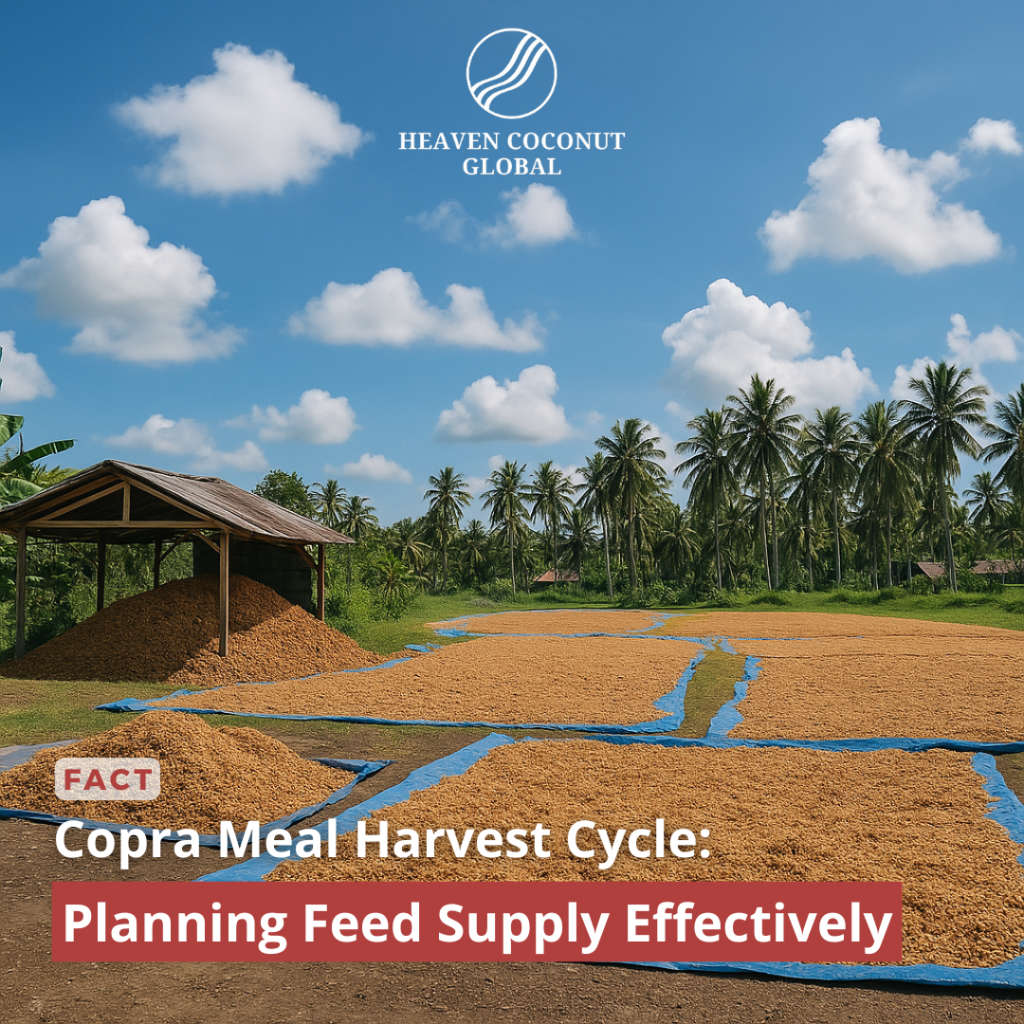
For livestock producers and animal feed distributors, timing is everything—especially when it comes to sourcing feed ingredients like copra meal. Derived from the dried kernel of the coconut, copra meal is a protein-rich byproduct used extensively in feed for cattle, poultry, and other livestock. To ensure consistent quality and competitive pricing, it’s essential to understand and plan according to the copra meal harvest cycle.
Understanding the Copra Meal Harvest Cycle
The availability of copra meal is closely tied to coconut harvesting seasons. In coconut-producing countries like Indonesia, the Philippines, and Sri Lanka, coconuts are harvested throughout the year but typically peak twice annually—during the dry seasons. In Indonesia, for instance, the highest coconut yields occur between May to August and November to January. These periods directly influence the volume and pricing of copra meal on the market.
During peak harvests, production of copra increases, which means more copra meal is available. This leads to lower prices and often better freshness due to high turnover. On the other hand, in off-peak seasons, supply tightens, and prices tend to rise. Without strategic planning, buyers may face cost inefficiencies and inconsistent feed quality.
Why Feed Planning Matters
Aligning your feed procurement with the copra meal harvest cycle can provide several benefits:
-
Cost Efficiency: Purchasing during peak harvest seasons helps you secure better prices and avoid inflation during periods of low supply.
-
Product Freshness: Fresher batches mean higher nutritional value, especially in terms of protein content and digestibility.
-
Logistical Stability: Planning in advance helps you mitigate risks such as shipping delays or sudden market fluctuations.
For example, securing contracts in June for delivery until September can ensure that you’re receiving competitively priced copra meal during the main harvest season.
Tips for Effective Planning
-
Monitor Regional Harvest Trends: Stay informed about local coconut harvest cycles in your supplier’s country. Regional weather patterns can shift harvesting schedules.
-
Build Relationships with Trusted Exporters: Collaborating with experienced suppliers ensures transparency and helps you forecast supply availability with greater accuracy.
-
Consider Forward Contracts: Locking in prices during peak supply can protect you from unexpected price spikes in the off-season.
-
Warehouse Capacity Planning: Make sure your storage facilities are ready to hold larger quantities during peak procurement periods without compromising quality.
Partnering with Reliable Suppliers
At Heaven Coconut Global, we understand the dynamics of the copra meal harvest cycle because we’re located at the heart of coconut production in Indonesia. Our deep integration with coconut farmers and processing facilities allows us to provide:
-
Consistent supply throughout the year
-
Real-time updates on harvest volumes
-
Flexible shipment scheduling (FOB or CIF options)
-
High-quality copra meal with detailed specifications (protein, fiber, moisture, etc.)
Our clients—ranging from feed manufacturers to livestock farms—depend on us not just for product delivery but also for supply chain insight. By choosing Heaven Coconut Global, you’re partnering with a team that combines agricultural expertise with international logistics precision.
Final Thoughts
Strategically aligning your procurement with the copra meal harvest cycle isn’t just smart—it’s necessary for any business that wants to stay ahead in the competitive animal feed market. Whether you’re managing bulk supply chains or formulating specialized feed, timing your purchases with harvest peaks ensures better pricing, quality, and long-term stability.
Ready to align your feed supply with the harvest calendar?
Let Heaven Coconut Global help you plan ahead and source smarter.