Common Questions Buyers Ask Before Importing Desiccated Coconut
Importing desiccated coconut may seem straightforward, but in practice, many international buyers face challenges due to unclear specifications, mismatched expectations, or lack of information at the early stage. Asking the right questions before placing an order is essential to avoid quality issues, shipment delays, and unexpected costs.
Below are some of the most common questions buyers ask before importing desiccated coconut, along with practical explanations to help buyers make informed decisions.
1. What Fat Content Should I Choose?
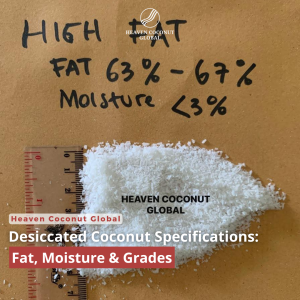
One of the first questions buyers ask is about fat content. Desiccated coconut is generally available in high fat, medium fat, and low fat variations.
-
High fat desiccated coconut is commonly used for bakery, confectionery, and ice cream applications due to its richer flavor and better moisture retention.
-
Low fat desiccated coconut is often preferred for cereals, snack mixes, or health-oriented products where oil content needs to be controlled.
Choosing the right fat content should always be based on end-use application, not price alone.
2. What Grades and Particle Sizes Are Available?
Buyers frequently ask about particle size, as it directly affects product appearance and texture. Common grades include:
-
Fine grade
-
Medium grade
Different markets and applications require different grades. Clear communication about particle size helps ensure the product performs as expected in manufacturing.
3. How Long Is the Shelf Life of Desiccated Coconut?
Shelf life is a critical consideration, especially for long-distance shipments. In general, desiccated coconut has a shelf life of 12 to 24 months, depending on:
-
Fat content
-
Moisture level
-
Packaging quality
-
Storage conditions
Proper packaging and moisture control play a major role in maintaining product stability during transit and storage.
4. What Packaging Is Suitable for Export?
Export-grade packaging is essential to protect desiccated coconut from moisture, contamination, and physical damage.
Buyers usually ask whether products are packed in:
-
Multi-layer paper bags with inner liners
-
Polypropylene (PP) bags with inner plastic liners
The right packaging helps preserve quality throughout transportation, especially for shipments passing through humid or warm climates.
5. What Documents Are Required for Importing Desiccated Coconut?
Documentation is one of the most common areas of concern for buyers. Typical export documents include:
-
Certificate of Analysis (COA)
-
Health Certificate
-
Phytosanitary Certificate
-
Certificate of Origin
-
Fumigation Certificate (if required by destination country)
Incomplete or incorrect documentation can lead to customs delays or additional charges, so clarity at the beginning of the transaction is crucial.
6. How Can Buyers Ensure Consistent Quality Across Shipments?
Consistency is often a bigger concern than initial quality. Buyers want to know how suppliers maintain the same standard across multiple shipments.
Important factors include:
-
Clear product specifications
-
Consistent raw material sourcing
-
Quality control procedures
-
Transparent communication between buyer and supplier
Reliable suppliers focus on long-term consistency rather than one-time shipments.
7. What Is the Typical Minimum Order Quantity?
Buyers frequently ask about minimum order quantities (MOQ), which usually depend on:
-
Packaging type
-
Container size (20ft or 40ft)
-
Destination market
Understanding MOQ early helps buyers plan logistics and inventory more efficiently.
8. How Do Buyers Avoid Common Import Mistakes?
Some common mistakes include:
-
Selecting fat content without considering application
-
Overlooking packaging requirements
-
Assuming all suppliers offer the same quality standards
-
Not confirming documentation details in advance
Asking clear, detailed questions early in the process helps prevent misunderstandings and reduces risk.
Final Thoughts
Importing desiccated coconut successfully starts with asking the right questions. Fat content, grade, packaging, documentation, and consistency all play a role in determining whether a shipment meets expectations.
At Heaven Coconut Global, we believe that clear communication and informed decision-making are the foundation of reliable international trade. By addressing these common questions upfront, buyers and suppliers can build smoother transactions and stronger long-term partnerships.