When sourcing desiccated coconut for food manufacturing, bakery production, confectionery, or retail packaging, buyers often focus on factors such as color, fat content, particle size, and price. However, one critical specification is sometimes overlooked: desiccated coconut moisture content.
Moisture content directly affects the shelf life, quality, safety, and overall performance of desiccated coconut during storage and transportation. Whether products are shipped domestically or exported across continents, maintaining the correct moisture level is essential to ensure the product arrives in excellent condition.
For manufacturers and importers, understanding the importance of moisture content can help reduce product losses, maintain consistency, and protect brand reputation.
What Is Moisture Content in Desiccated Coconut?
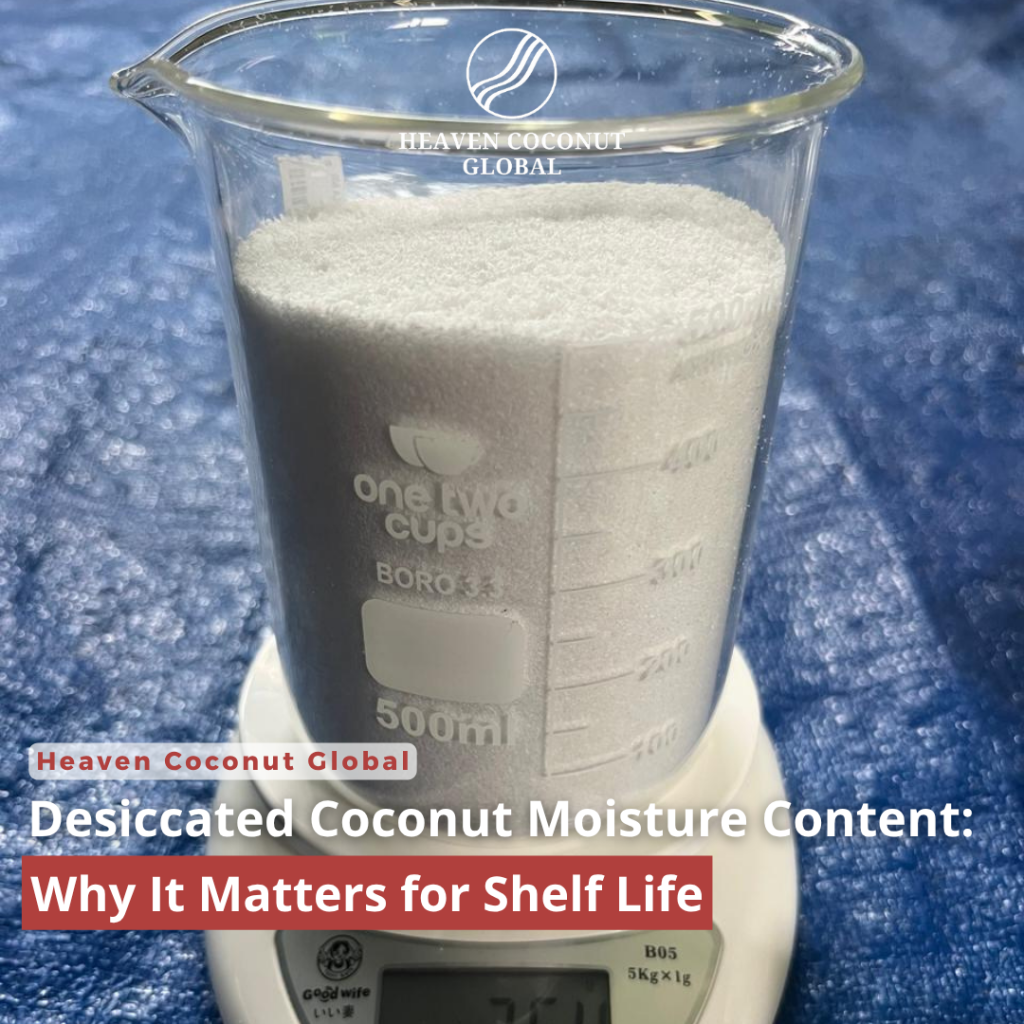
Moisture content refers to the amount of water remaining in desiccated coconut after the drying process.
During production, fresh coconut meat is cleaned, shredded, and carefully dried to reduce its water content. The goal is to achieve a moisture level that preserves product quality while preventing microbial growth and spoilage.
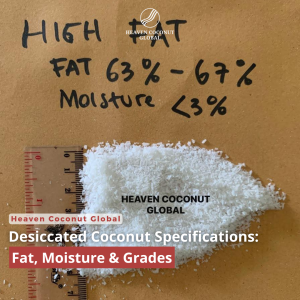
Most international standards specify that desiccated coconut should have a maximum moisture content of around 3%, although exact specifications may vary depending on customer requirements and destination markets.
Achieving this balance is important because both excessive and insufficient moisture can create quality issues.
Why Moisture Content Matters for Shelf Life
Shelf life is one of the most important considerations for food manufacturers and distributors.
Desiccated coconut often travels long distances before reaching end users. Products exported from Indonesia, for example, may spend several weeks in containers before arriving in markets across Europe, the Middle East, Asia, or North America.
When moisture levels are properly controlled, desiccated coconut can maintain its quality for many months under suitable storage conditions.
1. Prevents Microbial Growth
Excess moisture creates an environment where microorganisms can develop more easily.
Although desiccated coconut is a low-moisture product, even small increases in water content can increase the risk of spoilage during storage.
Maintaining the correct moisture specification helps reduce these risks and contributes to better food safety.
2. Protects Product Quality
Moisture can significantly influence the texture and appearance of desiccated coconut.
When moisture levels become too high, the product may:
- Lose its free-flowing texture
- Develop clumps or lumps
- Experience color changes
- Become less suitable for food processing applications
Manufacturers rely on consistent product characteristics to ensure smooth production processes. Proper moisture control helps maintain these qualities throughout the product’s shelf life.
3. Reduces Risk During Export Shipping
International shipments are exposed to changing temperatures and humidity levels.
Containers may travel through tropical climates, ports, and storage facilities before reaching their destination. If moisture levels are not properly controlled before shipment, the product becomes more vulnerable to quality deterioration during transit.
For exporters, moisture management is especially important because claims related to product quality can lead to financial losses and damaged business relationships.
The Relationship Between Moisture and Water Activity
While moisture content measures the amount of water present, another important factor is water activity.
Water activity indicates how much of that water is available for microbial growth.
A product can have relatively low moisture content but still experience quality issues if water activity is not properly controlled. This is why professional manufacturers monitor both parameters during production and quality assurance processes.
Together, moisture content and water activity provide a more complete picture of product stability and shelf life.
How Moisture Content Affects Different Industries
Bakery Industry
Bakeries use desiccated coconut in cakes, cookies, pastries, bread, and dessert products.
Consistent moisture content ensures predictable performance during mixing and baking. Variations can affect texture, taste, and overall product quality.
Confectionery Industry
Chocolate manufacturers and confectionery producers require stable ingredients to maintain product consistency.
Desiccated coconut with proper moisture levels helps support uniform production and reduces the risk of quality deviations.
Food Processing Industry
Food manufacturers often purchase large quantities of desiccated coconut for continuous production.
Reliable moisture specifications help streamline quality control and reduce manufacturing challenges.
Retail Packaging
Retail brands need products with long shelf lives because inventory may remain in warehouses and stores for extended periods.
Maintaining the correct moisture content helps preserve freshness and customer satisfaction throughout the distribution chain.
Proper Storage Is Equally Important
Even when desiccated coconut leaves the factory with the correct moisture specification, improper storage can compromise quality.
To maximize shelf life, buyers should follow several best practices:
- Store in a cool and dry environment
- Avoid direct sunlight
- Keep packaging sealed when not in use
- Protect products from excessive humidity
- Follow recommended storage conditions from the supplier
Good storage practices help maintain product quality from the factory to the final consumer.
What Buyers Should Look for in a Supplier
When evaluating suppliers, moisture content should be included as part of the quality assessment process.
Reliable suppliers typically provide:
- Detailed product specifications
- Certificate of Analysis (COA)
- Consistent quality control procedures
- Laboratory testing records
- Export-compliant packaging
Working with suppliers that prioritize quality management can reduce risks and improve supply chain reliability.
Buyers should also verify whether the supplier has experience serving international markets, where compliance with customer specifications is often critical.
Why Indonesian Desiccated Coconut Remains Competitive
Indonesia is one of the world’s leading producers of coconut-based products, including desiccated coconut.
Experienced Indonesian manufacturers invest in modern drying technology and quality control systems to ensure moisture levels meet international requirements. This enables buyers around the world to receive products that are suitable for long-distance shipping and long-term storage.
As global demand for coconut ingredients continues to grow, moisture management remains one of the key factors that distinguish high-quality desiccated coconut from lower-grade alternatives.
Conclusion
Desiccated coconut moisture content is much more than a technical specification. It plays a direct role in shelf life, food safety, product consistency, and customer satisfaction.
Proper moisture control helps prevent spoilage, preserve texture, maintain quality during export shipments, and support long-term storage stability. For importers, distributors, and food manufacturers, selecting a supplier that consistently manages moisture content is an important step toward ensuring reliable product performance.
At Heaven Coconut Global, we work with experienced Indonesian manufacturing partners to supply high-quality desiccated coconut that meets international quality standards. Our commitment to consistency, documentation, and customer satisfaction helps buyers source coconut ingredients with confidence for global markets