Indonesia is one of the world’s largest coconut producers. Various coconut derivative products such as desiccated coconut, virgin coconut oil (VCO), copra meal, and activated carbon are in high demand in global markets. However, entering the export market requires a solid understanding of the export shipping of coconut derivative products, from warehouse preparation to port clearance. This article provides a complete guide for exporters to ensure their shipments are handled efficiently, safely, and according to international standards.
1. Preparing Products in the Warehouse
Before shipment, ensure the following steps are taken:
-
Product Quality: Ensure the product meets export standards for the destination country (e.g., moisture level, packaging, cleanliness).
-
Export Packaging: Use food-grade, moisture-resistant, and durable packaging suitable for long-distance transport.
-
Labeling: Labels must include key information such as product name, net weight, country of origin, and batch number.
2. Export Documentation
Proper documentation is essential for the smooth export shipping of coconut derivative products. Essential documents include:
-
Invoice and Packing List
-
Certificate of Origin (COO)
-
Export Declaration (PEB)
-
Health Certificate / Phytosanitary Certificate (if required)
-
Shipping Instruction and Bill of Lading (B/L)
Tip: Use a reliable freight forwarder to assist with export documentation and compliance.
3. Coordinating with Logistics Providers
Choose a logistics partner experienced in agricultural shipments. Consider:
-
Type of Container: For products like VCO, use a flexitank. For desiccated coconut, use a 20 ft or 40 ft container with proper humidity control.
-
Transport Timing: Schedule pickup from the warehouse to match vessel departure.
-
Export Insurance: Protect your products with export insurance to avoid potential losses.
4. Shipping Process to the Port
Steps involved in getting your goods to the port include:
-
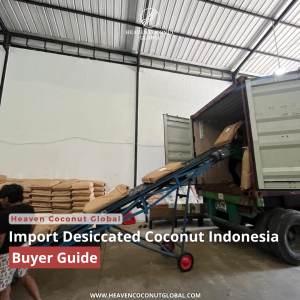
Container Stuffing: Done at the warehouse (ex-work) or at the port (FOB).
-
Container Sealing: After loading, seal the container for safety.
-
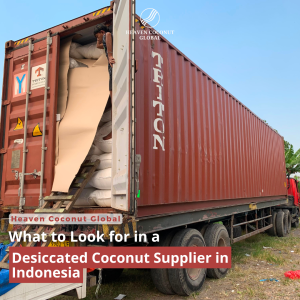
Transport to Port: The container is delivered to export ports such as Tanjung Perak, Tanjung Priok, or Belawan.
-
Custom Clearance: Customs authorities verify documents and inspect containers before vessel departure.
5. Monitoring and Communication
After dispatch:
-
Track the Container: Monitor the vessel’s location and estimated time of arrival.
-
Update the Buyer: Communicate regularly with your buyer about shipping status and expected delivery.
Conclusion
Successful export shipping of coconut derivative products requires careful coordination—from warehouse to port. With the right documentation, reliable logistics, and proper handling, exporters can ensure timely and safe delivery to international markets.
At Heaven Coconut Global, we specialize in high-quality coconut derivative products, including VCO, desiccated coconut, and copra meal, ready to ship worldwide with full export support.
🌴 Looking for a trusted supplier? Let Heaven Coconut Global handle your sourcing and shipping needs.
📞 Contact us today and scale your coconut export business with confidence.