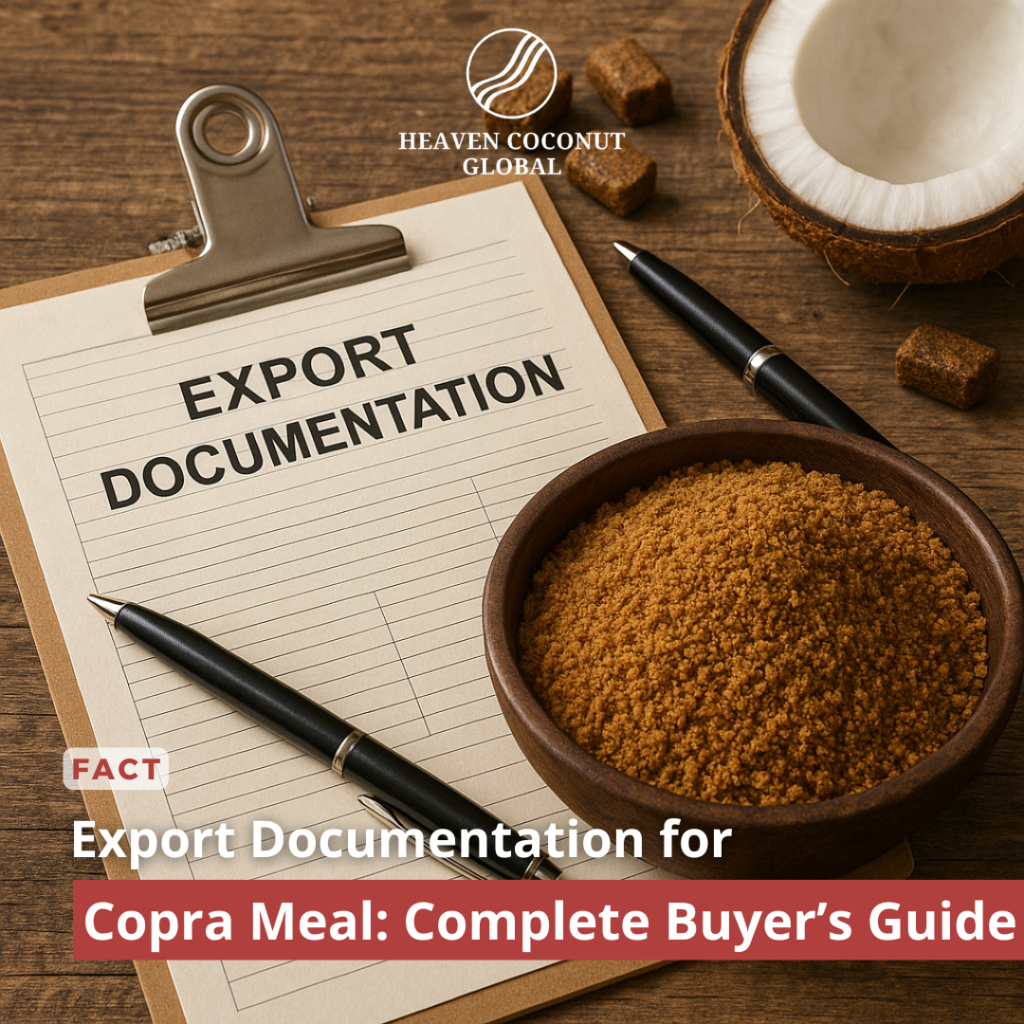
In the global animal feed industry, copra meal has become a sought-after commodity due to its high protein content and affordability. For buyers, understanding the export documentation for copra meal is essential to ensure smooth transactions and avoid delays at customs. This guide will walk you through the key documents, their purposes, and what you should expect when sourcing copra meal from Indonesia.
Why Export Documentation Matters
Export documentation plays a vital role in international trade. For buyers, these documents ensure product quality, compliance with regulations, and a smooth shipping process. Missing or incorrect paperwork can lead to shipment delays, extra costs, or even cargo rejection at the destination port.
When purchasing copra meal, having the right documentation in place provides assurance that:
-
The product meets quality standards.
-
The shipment complies with both the exporter’s and importer’s country regulations.
-
Payment and delivery terms are clearly defined and verifiable.
Essential Export Documents for Copra Meal
Below is a list of the most important export documentation for copra meal:
1. Commercial Invoice
The commercial invoice is issued by the exporter and serves as a bill for the buyer. It includes product details, price, payment terms, and delivery terms according to the agreed Incoterms.
2. Packing List
The packing list provides details of the shipment’s contents, including net weight, gross weight, number of bags, and packaging type. This helps both customs and logistics providers verify cargo details.
3. Bill of Lading (B/L) or Airway Bill
For sea shipments, the bill of lading is issued by the shipping line and serves as proof of shipment, a receipt of goods, and a title document. It specifies the vessel name, loading port, discharge port, and consignee details.
4. Certificate of Origin (COO)
A Certificate of Origin is issued by the Indonesian Chamber of Commerce or a relevant authority. It proves that the copra meal is produced and sourced from Indonesia, which may qualify for tariff benefits under certain trade agreements.
5. Phytosanitary Certificate
This document is issued by the Indonesian Quarantine Authority. It confirms that the copra meal is free from pests, contaminants, and diseases, ensuring compliance with the importer’s biosecurity regulations.
6. Fumigation Certificate
Some countries require fumigation of agricultural products before shipment. This certificate verifies that the copra meal has been treated to eliminate pests and ensure safe entry into the importing country.
7. Material Safety Data Sheet (MSDS)
The MSDS provides technical and safety information about the copra meal. It is often requested for regulatory purposes and for safe handling during storage and transport.
Additional Documentation Based on Buyer Requirements
In some cases, buyers may request extra documents such as:
-
Quality Analysis Report (showing protein, moisture, and fiber content)
-
SGS Inspection Report
-
Insurance Certificate (if required under Incoterms)
Tips for Buyers When Reviewing Export Documentation
-
Verify Accuracy: Cross-check all details in the documents, especially product specifications, quantities, and shipment dates.
-
Request Digital Copies in Advance: Having scanned copies before shipment arrival allows you to prepare for customs clearance ahead of time.
-
Understand Import Regulations: Each country has different requirements for importing copra meal; ensure your supplier is aware of them before shipment.
Conclusion
For buyers, understanding the export documentation for copra meal is a key step toward ensuring a smooth and secure transaction. From commercial invoices to phytosanitary certificates, each document serves a specific purpose that protects both parties and facilitates the flow of goods. By working with an experienced exporter and verifying all documents in advance, you can avoid costly delays and ensure your copra meal shipment arrives on time and in compliance with all regulations.