High-Fat Desiccated Coconut: Applications & Quality Standards
High-fat desiccated coconut is one of the most important coconut-based ingredients used in food manufacturing today. With its naturally rich taste, high oil content, and clean white appearance, it is widely preferred by global buyers looking for consistent quality. This ingredient plays a major role in bakery, confectionery, cereal production, and emerging plant-based food segments. Understanding its characteristics and quality requirements is essential for buyers who depend on stable supply and uniform performance in their production lines.
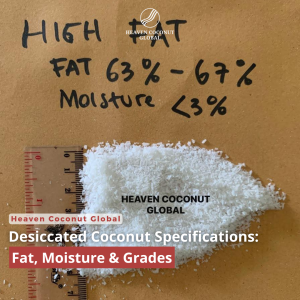
High-fat desiccated coconut is produced from mature coconut meat that is finely grated and dried under strict hygienic conditions. The result is a product with a naturally high oil level, typically ranging between 60% and 65%. This fat profile enhances both flavor and texture, making it suitable for many commercial and industrial applications.
Key Applications in Global Food Manufacturing
Confectionery Products
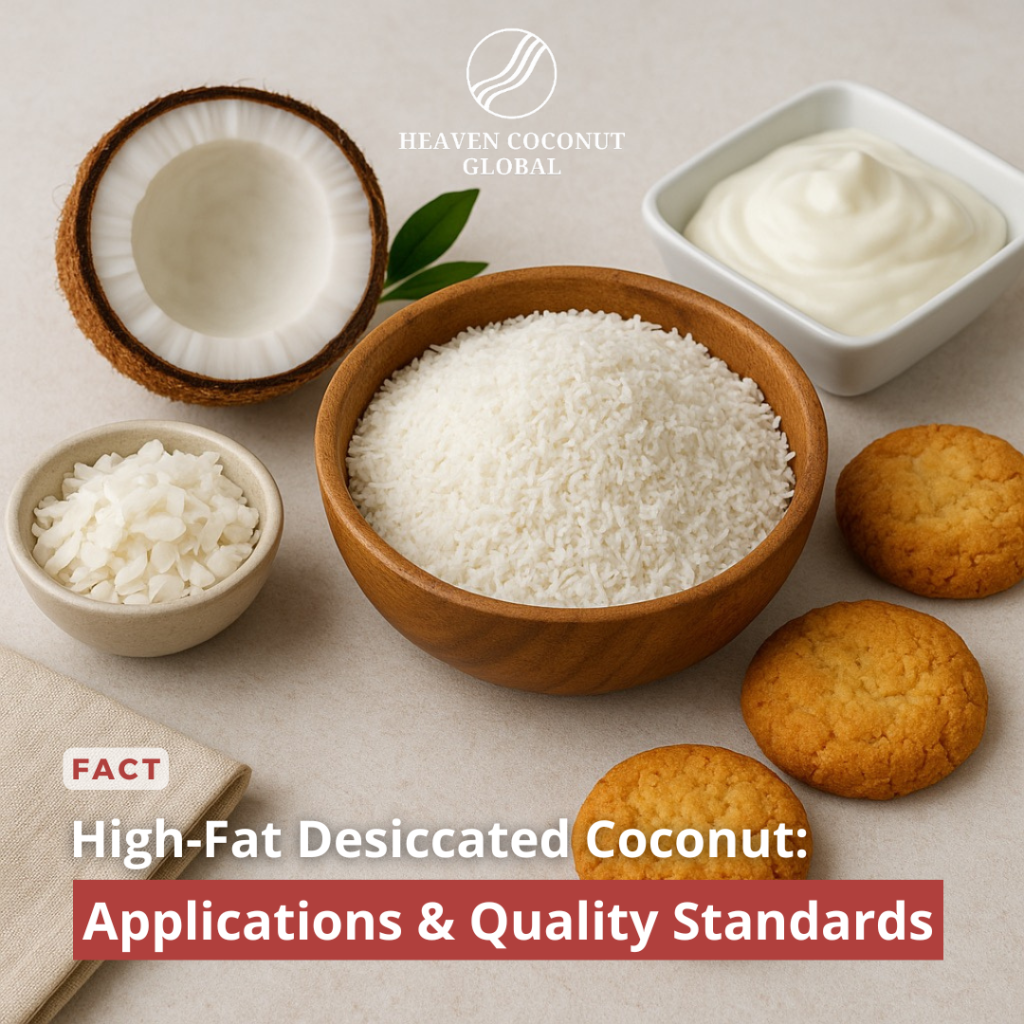
The confectionery industry relies heavily on this ingredient to achieve a smooth and creamy mouthfeel. Its natural fat content blends well with chocolate, sugar, and dairy ingredients, making it ideal for products such as chocolate bars, pralines, coconut candy, sweet fillings, and energy bites. Manufacturers often choose it over low-fat variants because it provides superior flavor and structural stability.
Bakery and Pastry Goods
In bakery production, moisture retention is essential. The high oil content in this ingredient helps maintain softness in cookies, cakes, muffins, pastries, and bread toppings. It not only enhances flavor but also improves texture and shelf life. Many bakeries use it as a key ingredient in signature recipes where natural taste and premium quality are required.
Breakfast Cereals and Granola
The clean-label movement has increased the use of coconut-based ingredients in cereal and granola products. This ingredient works well in granola mixes, multigrain blends, cereal bars, and snack clusters. Its mild sweetness and natural fat content support the growing demand for wholesome, minimally processed foods.
Plant-Based and Dairy-Free Foods
As global consumers shift toward vegan and dairy-free products, high-fat desiccated coconut plays an important role as a natural fat source. It is used in coconut yogurt, dairy-free ice cream, vegan desserts, and creamer blends. Because it provides a creamy texture without artificial additives, it fits perfectly into modern health-conscious product formulations.
Quality Standards Global Buyers Must Consider
Oil (Fat) Content
A high oil level—typically 60–65%—indicates premium quality and better performance in food formulations.
Moisture Level
To ensure shelf stability and prevent microbial growth, moisture should not exceed 3.5%.
Color and Granulation
The product should be clean, white, and uniform in either fine or medium granulation. Any discoloration or burnt specks may indicate poor processing.
Microbiological Safety
International buyers often request low plate count, absence of salmonella, and controlled yeast and mold. Certifications such as Halal, Kosher, HACCP, ISO, and FDA approval strengthen product credibility.
Packaging and Shelf Life
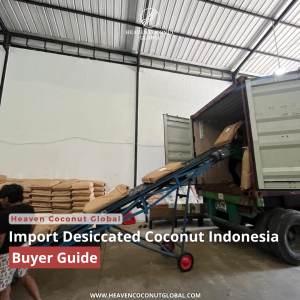
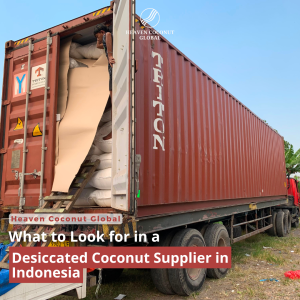
Export packaging typically involves 25 kg kraft paper bags with food-grade liners. When stored in cool, dry conditions, shelf life reaches up to 12 months.
Buyer Checklist Before Importing
✔ Request COA and full lab analysis
✔ Confirm certification compliance
✔ Review packaging and export documents
✔ Verify supplier reputation and origin
✔ Compare prices by grade, port, and season
Ready to Source Premium Quality?
Heaven Coconut Global supplies export-quality high-fat desiccated coconut from Indonesia with consistent quality, reliable production, and complete documentation.
Contact us today for prices, samples, and detailed specifications