Export Documentation for Copra Meal: A Complete Guide for Smooth International Trade
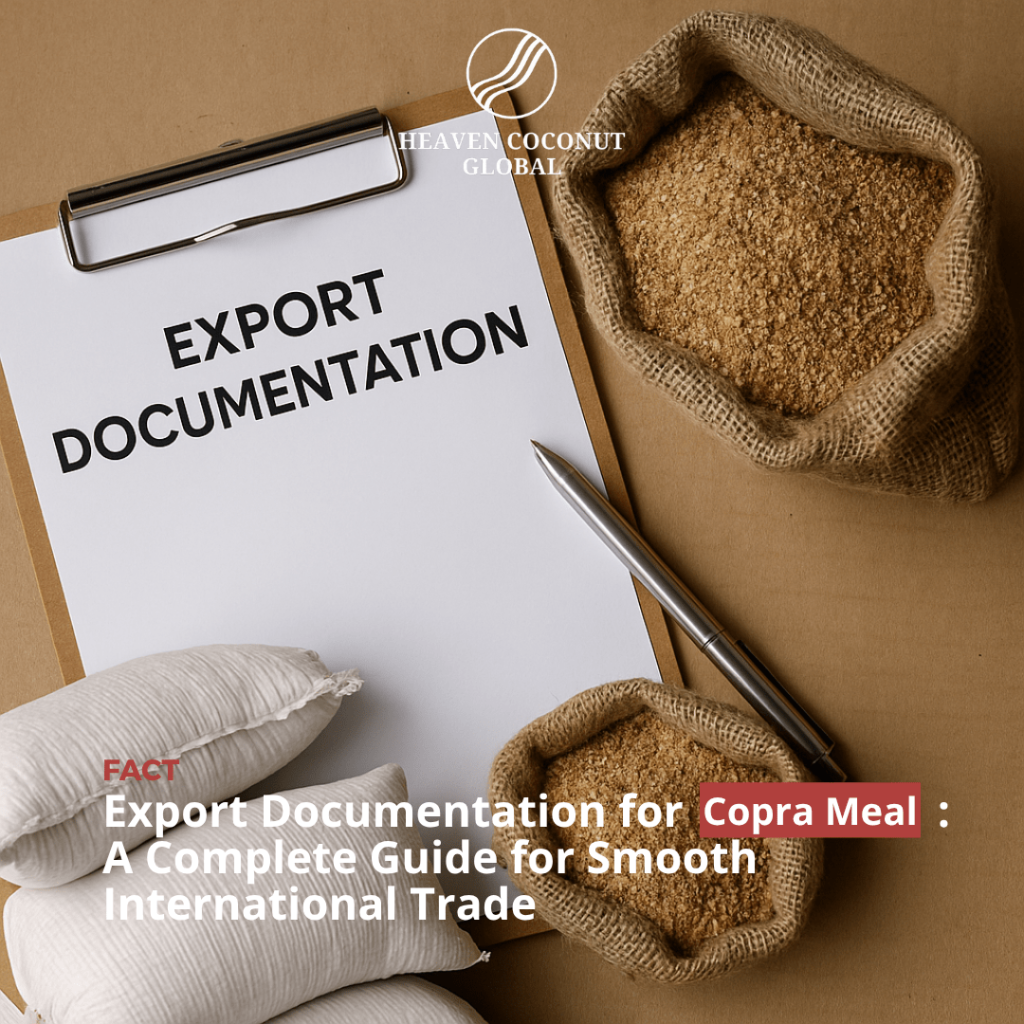
Exporting copra meal, a high-protein byproduct of coconut oil production, requires more than just sourcing the product. To ensure a smooth international trade process, exporters must comply with global shipping regulations and prepare the proper documentation. In this article, we’ll walk you through the essential export documentation for copra meal, offering insights to minimize delays and streamline your business operations.
Whether you’re an experienced trader or a first-time exporter, this guide will help you navigate the process with confidence.
Why Export Documentation Matters in Copra Meal Trade
Copra meal is a widely used raw material in animal feed production across global markets. However, its classification as an agricultural and organic commodity means that it’s subject to both sanitary and phytosanitary measures. Missing or incorrect documents can lead to customs delays, rejection at the port, or even penalties.
Proper documentation not only ensures compliance but also builds trust with international buyers.
Key Export Documents for Copra Meal
Here’s a checklist of essential documents required when exporting copra meal:
1. Proforma Invoice
A proforma invoice is the first step in any export transaction. It outlines the product details, quantity, specifications, price, shipping terms (Incoterms), and payment terms. It serves as a quotation for the buyer.
2. Commercial Invoice
Issued after the buyer confirms the order, this document is a legally binding record of the sale. It must include:
-
Exporter and importer details
-
Product description (e.g., copra meal – defatted, high-protein)
-
Quantity and unit price
-
Total value
-
Incoterms (e.g., CIF Dammam)
-
Payment terms
3. Packing List
This document details the contents of each package or container, including:
-
Number of bags or tons
-
Net and gross weights
-
Packaging type (e.g., 50 kg PP bags)
-
Container number
4. Bill of Lading (B/L)
The bill of lading is issued by the shipping line and serves as:
-
Proof of shipment
-
Receipt of goods
-
Title of ownership (can be negotiable)
For CIF (Cost, Insurance, and Freight) shipments, this document is typically consigned to the buyer or their bank.
5. Certificate of Origin (COO)
Issued by the chamber of commerce or relevant authority, this certificate proves the country of origin of the copra meal. It may be required for customs clearance or to claim tariff exemptions.
6. Phytosanitary Certificate
Copra meal, being a plant-based material, may need a phytosanitary certificate to confirm it’s free from pests and complies with the import country’s plant health regulations.
7. Fumigation Certificate
Some countries require that agricultural products be fumigated before import. The fumigation certificate proves this treatment was done according to international standards.
8. Material Safety Data Sheet (MSDS)
Though not hazardous, copra meal often requires an MSDS that outlines product safety, storage, and handling guidelines. This is especially relevant for customs and port authorities.
9. Insurance Certificate (for CIF Shipments)
An insurance certificate is necessary for CIF terms to prove that the cargo is insured during the shipping process.
Country-Specific Documents and Import Permits
Depending on the destination country, additional documentation may be needed, such as:
-
Import permits
-
Veterinary certificates
-
Halal certification (for certain markets like Saudi Arabia or Malaysia)
At Heaven Coconut Global, we ensure that every shipment is tailored to the specific requirements of the buyer’s country.
How Heaven Coconut Global Supports Hassle-Free Export
At Heaven Coconut Global, we understand that documentation is the backbone of international trade. That’s why we offer end-to-end support to our clients by:
✅ Preparing all necessary export documents
✅ Coordinating with inspection and fumigation authorities
✅ Ensuring compliance with country-specific import regulations
✅ Arranging shipping under your preferred Incoterms (FOB, CIF, CNF)
✅ Providing transparent communication throughout the process
With over a decade of experience in exporting copra meal, RBD coconut oil, and desiccated coconut, we’ve built a reputation for reliability and quality.
Final Thoughts
Exporting copra meal successfully depends not only on the quality of the product but also on getting the documentation right. From the proforma invoice to the bill of lading, each document plays a crucial role in ensuring a smooth, legal, and profitable export transaction.
If you’re looking for a trusted partner to help you navigate this process, Heaven Coconut Global is ready to serve.
Ready to Export Copra Meal?
Let’s talk. Contact Heaven Coconut Global for documentation-ready, export-quality copra meal, delivered with reliability and professionalism.